
Industrial Revolution
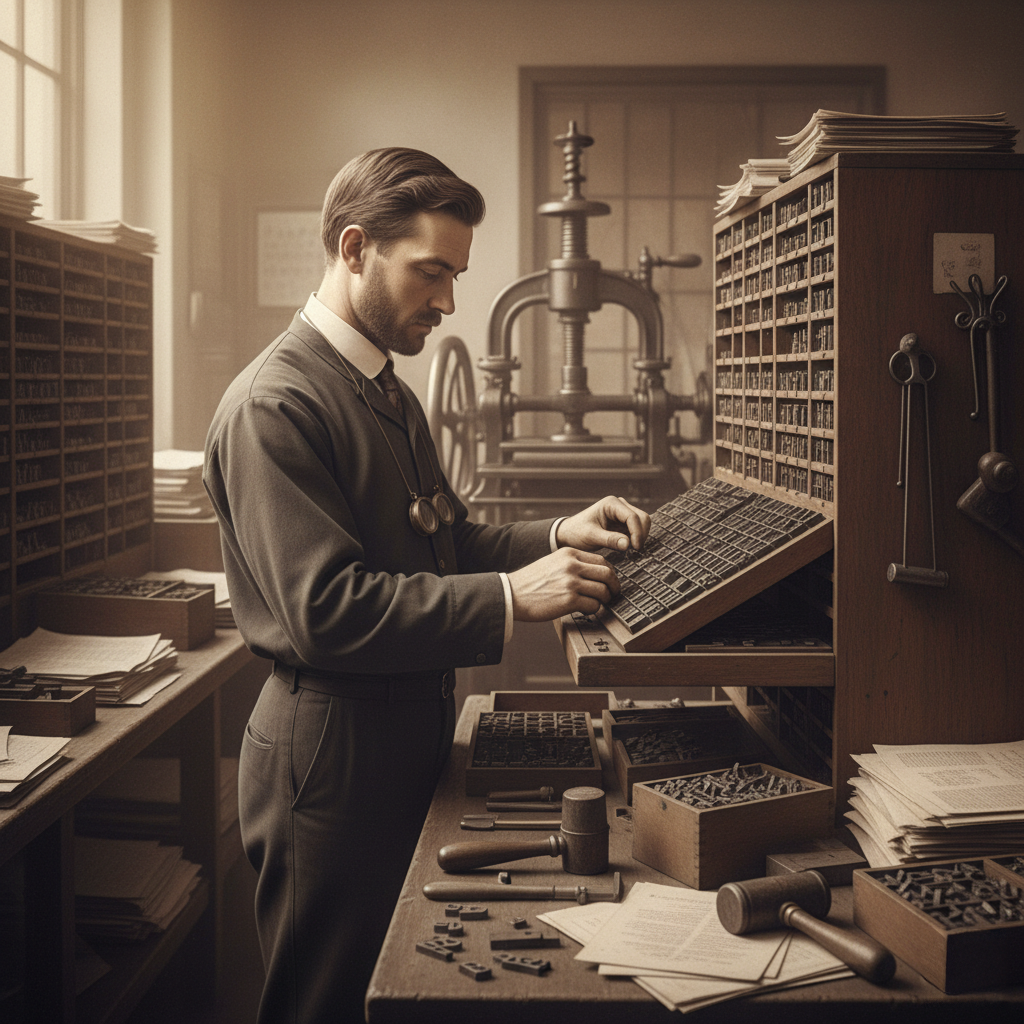
Typesetter
An extinct profession from Industrial Revolution that became obsolete due to technological advancement and societal change.
Media Gallery
Related Exhibits
Map Engraver
Map engravers were skilled artisans responsible for the intricate task of transferring cartographic designs onto metal plates, which were then used for printing maps. This occupation flourished during the Industrial Revolution, a period marked by rapid advancements in technology and a growing demand for accurate geographical representations. The engraver's work was crucial for the production of maps that guided explorers, navigators, and the general public, reflecting the expanding knowledge of the world and the increasing importance of navigation in trade and exploration. The process of map engraving was meticulous and required a deep understanding of both art and science. Engravers would begin with a detailed drawing of the map, often created by cartographers who specialized in the art of map-making. Using tools such as burins and gravers, the engraver would carve the design into a copper or zinc plate, creating a reverse image of the map. This required not only precision but also an artistic eye to ensure that the final product was both accurate and aesthetically pleasing. Once the engraving was complete, the plate would be inked and pressed onto paper, producing the final map that would be distributed for use. Map engravers played a vital role in the dissemination of knowledge during a time when maps were essential for navigation, land ownership, and military strategy. Their work contributed to the Age of Exploration, as accurate maps were crucial for explorers venturing into uncharted territories. As such, map engravers were respected members of the printing and publishing industries, often working closely with publishers and cartographers to produce high-quality maps for various purposes, including atlases, travel guides, and educational materials.
Explore More Exhibits
Discover the full collection of past and future professions in The Jobs Museum.