
Victorian Era
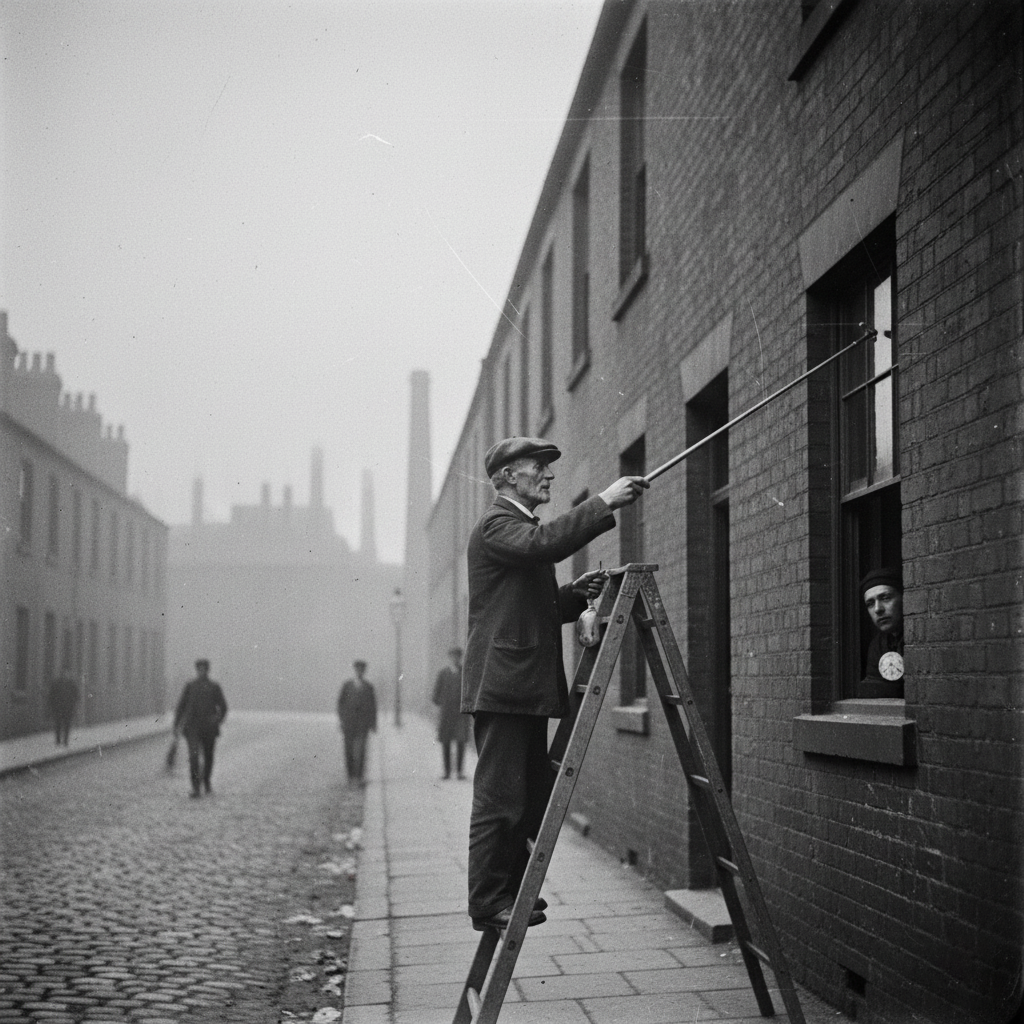
Knocker-Upper
An extinct profession from Victorian Era that became obsolete due to technological advancement and societal change.
Media Gallery
Related Exhibits
Stagecoach Driver
The stagecoach driver, a vital figure in the 19th century, was responsible for transporting passengers and goods across vast distances in horse-drawn coaches. These drivers navigated rugged terrains, often through treacherous weather conditions, ensuring the safety and comfort of their passengers. The stagecoach itself was a marvel of engineering, designed to carry multiple passengers and their luggage, while the driver skillfully managed a team of horses, often up to six, to pull the heavy vehicle. The role required not only a deep understanding of the horses and the coach but also an intimate knowledge of the routes, including potential hazards such as rough roads, rivers, and bandit-infested areas. Stagecoach drivers were often seen as the lifeline of communication and commerce in the expanding American West, connecting remote settlements with urban centers and facilitating the movement of mail and goods.
Flint Knapper
The flint knapper was a skilled artisan responsible for shaping flint and other stones into tools and weapons, a practice that dates back to the earliest human societies. This occupation was crucial for survival, as the tools created by flint knappers were essential for hunting, gathering, and daily tasks. Flint knapping involved a deep understanding of the material properties of stone, as well as the techniques required to create sharp edges and points. The flint knapper would carefully strike the stone with a hammerstone or another tool, removing flakes to create the desired shape. This process required not only physical skill but also an artistic eye, as the knapper had to envision the final product while working with the raw material. Flint knappers often worked in groups, sharing techniques and knowledge, which contributed to the development of regional styles and tool types. The tools produced ranged from simple hand axes to complex projectile points, each designed for specific tasks and environments. As societies evolved, so did their tool-making techniques, leading to the eventual decline of the flint knapper's role in favor of metalworking and other advanced technologies.
Explore More Exhibits
Discover the full collection of past and future professions in The Jobs Museum.