
Early 20th Century
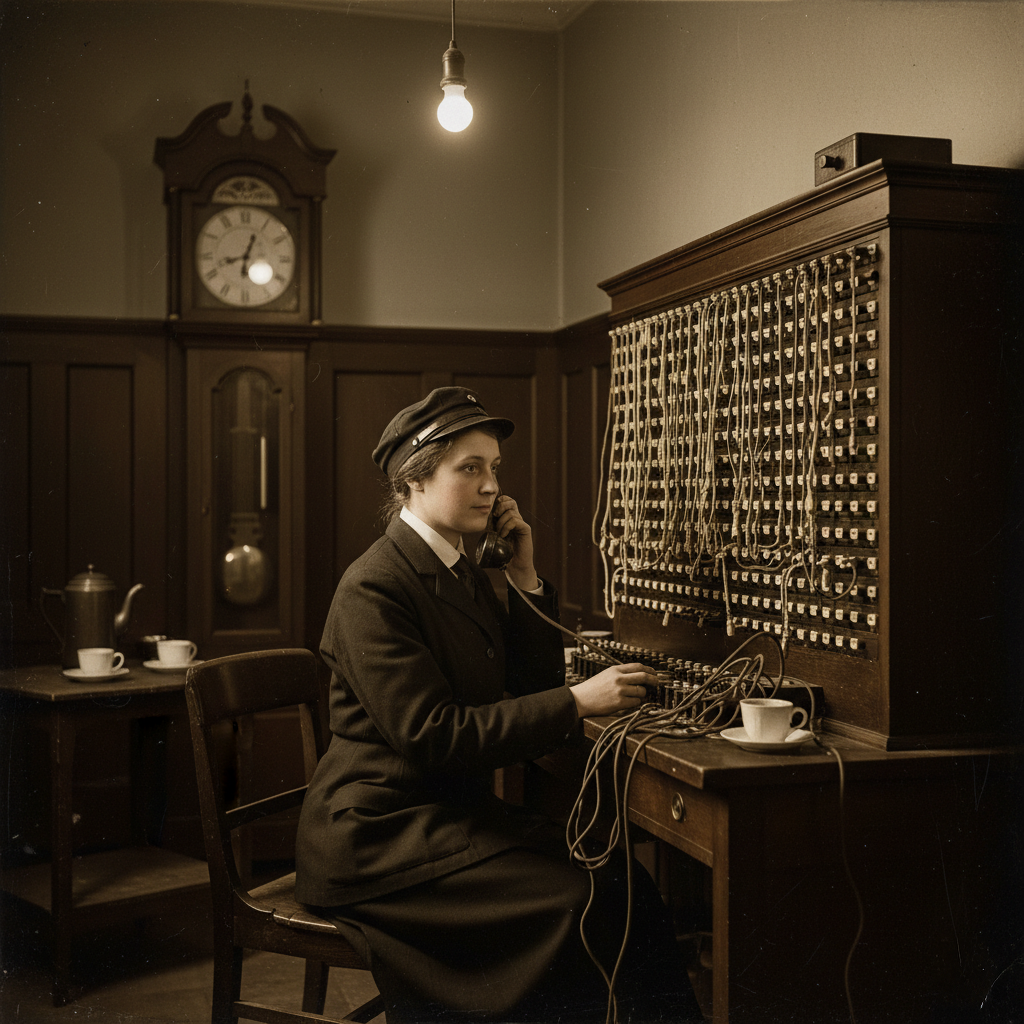
Switchboard Night Watch
An extinct profession from Early 20th Century that became obsolete due to technological advancement and societal change.
Media Gallery
Related Exhibits
Telegraph Operator
In the bustling world of the Victorian Era, the telegraph operator stood as a vital link in the chain of communication that transformed society. With the advent of the electric telegraph in the early 19th century, this occupation emerged as a cornerstone of modern communication, allowing messages to traverse vast distances in mere moments. The telegraph operator was responsible for sending and receiving messages encoded in Morse code, a system of dots and dashes that conveyed information across wires. Dressed in a crisp uniform, often adorned with a badge of the telegraph company, the operator would sit at a telegraph key, a device resembling a small lever, and tap out messages with precision and speed. The rhythmic clicking of the key became a familiar sound in telegraph offices, where operators worked in shifts, often in dimly lit rooms filled with the hum of machinery and the crackle of electrical currents. The role of the telegraph operator was not merely mechanical; it required acute listening skills and a deep understanding of Morse code. Operators often had to decipher messages quickly, sometimes under pressure, as they relayed urgent news, weather reports, and personal correspondence. They played a crucial role in connecting people, businesses, and governments, facilitating trade and diplomacy in an increasingly interconnected world. As the telegraph network expanded, so did the responsibilities of the operator, who often served as a point of contact for the public, answering inquiries and providing information. The job was both demanding and rewarding, offering a glimpse into the rapid technological advancements of the time and the profound impact of communication on society.
Explore More Exhibits
Discover the full collection of past and future professions in The Jobs Museum.