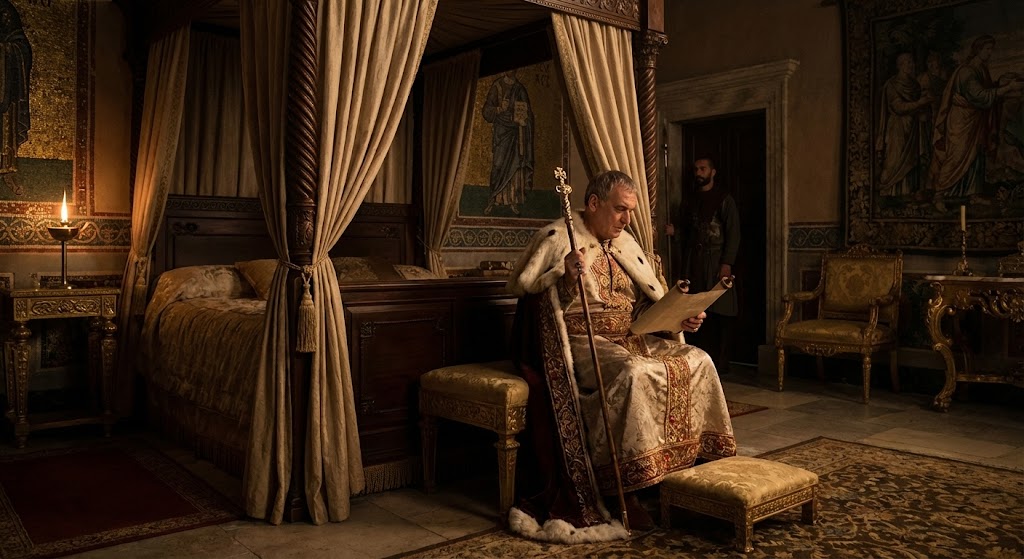
About the Parakoimomenos Profession
The Parakoimomenos, often translated as 'bedchamber attendant' or 'chamberlain,' was a significant role in the households of the elite during the Classical Antiquity period, particularly in the Byzantine Empire. This position was not merely one of servitude; it was a trusted role that involved close personal service to the emperor or high-ranking officials. The Parakoimomenos was responsible for the personal care and comfort of their charge, overseeing the sleeping quarters, and ensuring that the environment was conducive to rest and privacy. This included managing the temperature of the room, preparing bedding, and even attending to the personal needs of the individual they served. The role required a high level of discretion and loyalty, as the Parakoimomenos often had access to sensitive information and was privy to the intimate details of their employer's life.
In addition to personal care, the Parakoimomenos also played a role in the ceremonial aspects of the household, assisting in the preparation for audiences and events. They were often involved in the selection of clothing and accessories, ensuring that their employer was always presented in the best light. This position was a blend of servant and confidant, requiring a deep understanding of the social dynamics of the court and the ability to navigate complex relationships with other members of the household and nobility.
Day in the Life of a Parakoimomenos
Early Morning: The Awakening
As dawn breaks, the Parakoimomenos begins their day before the sun fully rises. They enter the chamber of their charge, ensuring that the room is warm and inviting. The first task is to gently awaken the emperor or noble, often with soft words and a respectful demeanor. After the initial greeting, they prepare a basin of water for washing, ensuring that it is at the right temperature, and lay out fresh linens for the bed.
Mid-Morning: Personal Care
Once their charge is awake, the Parakoimomenos assists with personal grooming. This includes selecting appropriate garments for the day, often made of fine fabrics, and helping with dressing. They may also prepare a light breakfast, ensuring that the meal is to the liking of their employer. Throughout this time, the Parakoimomenos must remain attentive, anticipating needs and responding to requests with efficiency and grace.
Afternoon: Administrative Duties
After the morning routine, the Parakoimomenos may have a brief respite but is always on call. They might be tasked with running errands within the palace, delivering messages, or fetching items needed for the day’s activities. This could involve interacting with other servants and officials, requiring a keen sense of diplomacy and social awareness.
Evening: Preparing for the Night
As the day winds down, the Parakoimomenos prepares the chamber for the night. This includes ensuring that the bed is turned down, the room is secure, and any necessary items for the night are within reach. They may also assist in the evening rituals, which could involve preparing for a meal or a gathering of guests. The Parakoimomenos must maintain a balance of visibility and discretion, ensuring that their employer feels both attended to and respected.
Late Night: Vigilance
Once the household is settled for the night, the Parakoimomenos remains vigilant, ready to respond to any needs that may arise. This could involve staying close by or being on call to address any emergencies or requests. Their role is one of constant readiness, reflecting the trust placed in them by their employer.