
Gilded Age
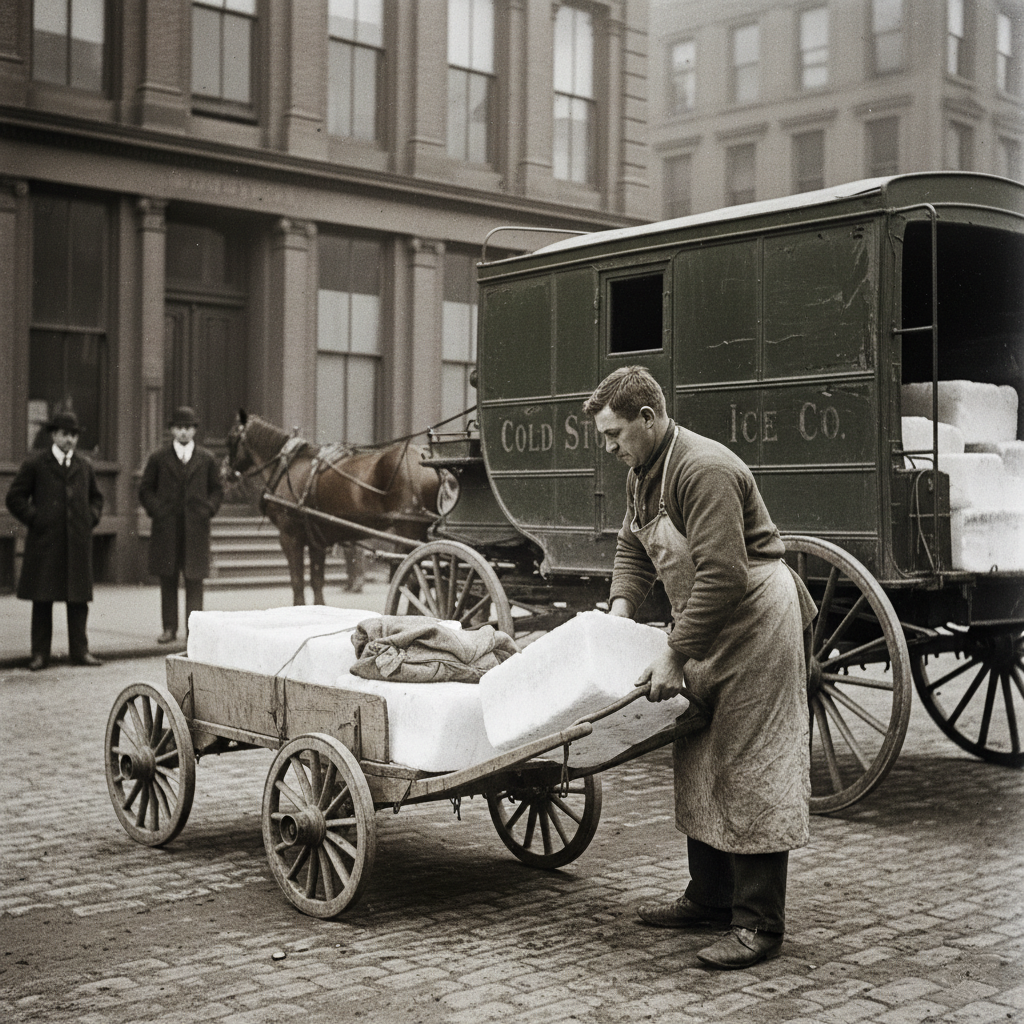
Ice Delivery Man
An extinct profession from Gilded Age that became obsolete due to technological advancement and societal change.
Media Gallery
Related Exhibits
Wool-stapler
The wool-stapler was a vital figure in the textile industry during the Industrial Revolution, primarily active from the late 18th century to the mid-19th century. This occupation revolved around the preparation and sorting of wool before it was spun into yarn. Wool-staplers were responsible for assessing the quality of raw wool, which involved separating it into different grades based on factors such as fiber length, fineness, and cleanliness. They played a crucial role in ensuring that only the best quality wool was sent to the spinning mills, thus influencing the quality of the final textile products. Wool-staplers worked in warehouses or wool depots, often in close proximity to sheep farms and textile mills. Their work was labor-intensive and required a keen eye for detail, as they had to identify the subtle differences in wool quality. The wool was often delivered in large bales, and the wool-stapler would open these bales, inspect the contents, and then sort the wool into piles according to its grade. This sorting process was essential for the efficient operation of the textile industry, as different grades of wool were used for different types of fabrics. In addition to sorting, wool-staplers also had to keep meticulous records of the wool they processed, noting the quantities and grades for inventory and pricing purposes. They often worked long hours, especially during peak seasons when wool was harvested, and their expertise was highly valued in the supply chain of the textile industry.
Explore More Exhibits
Discover the full collection of past and future professions in The Jobs Museum.