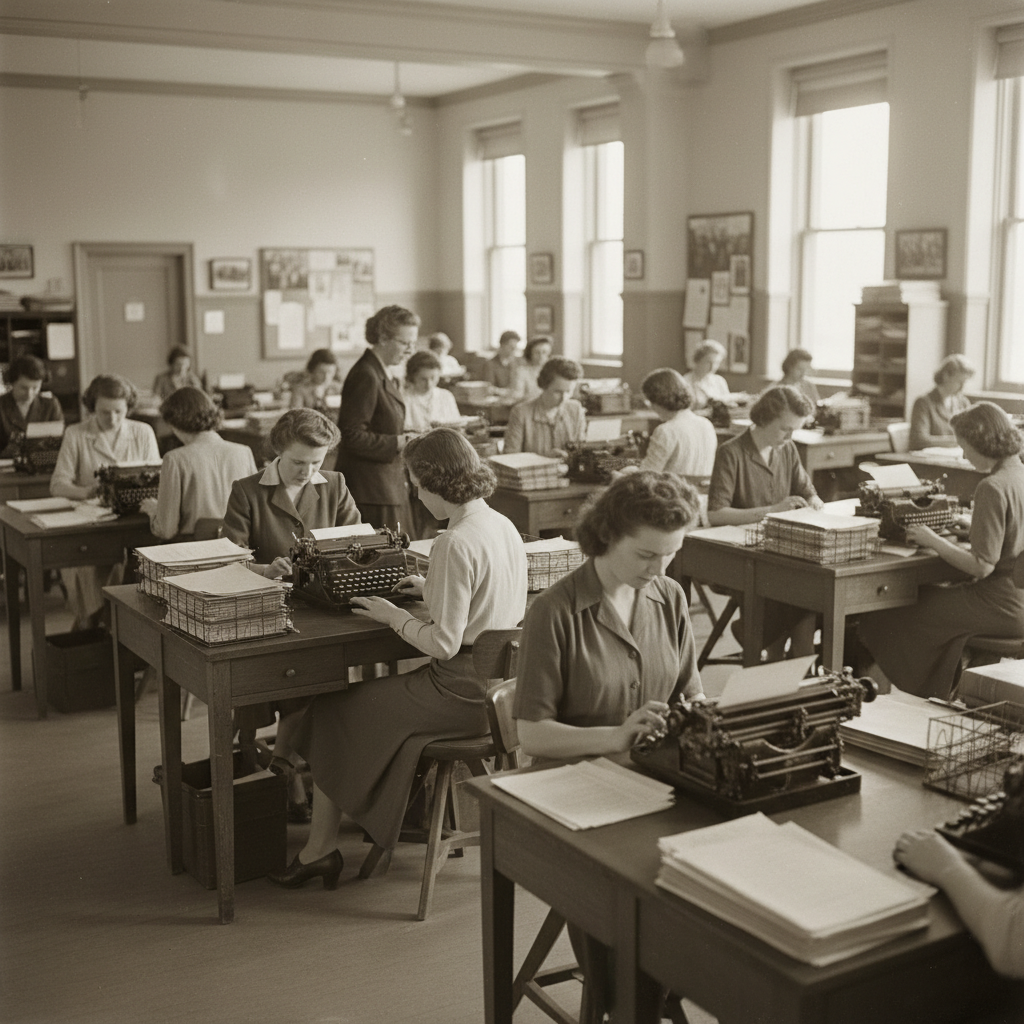
About the Typist Pool Worker Profession
The Typist Pool Worker was a vital cog in the machinery of mid-20th century office life, particularly in the bustling corporate environments of the Post-War Era, from the late 1940s to the early 1980s. These skilled individuals were responsible for producing typed documents, correspondence, and reports, often under tight deadlines. They worked in a shared office space known as a 'typist pool,' where multiple typists would be stationed at rows of typewriters, each contributing to the efficiency of the office. The typist pool was a reflection of the era's burgeoning corporate culture, where the demand for clerical work surged as businesses expanded in the post-war economic boom.
The role required not only speed and accuracy in typing but also a keen understanding of office protocols and etiquette. Typist Pool Workers were often the first point of contact for incoming correspondence, and their ability to produce clear, professional documents was crucial for maintaining the image of the organization. They utilized carbon paper for duplicating documents and were adept at using various typewriter models, each with its own quirks and features. The job was often seen as a stepping stone for women entering the workforce, providing them with financial independence and a foothold in the corporate world.
Day in the Life of a Typist Pool Worker
Morning: The Start of the Day
As the clock strikes 8:30 AM, the typist pool begins to buzz with activity. Typist Pool Workers arrive, settling into their designated typewriters, each equipped with a fresh sheet of paper and a cup of coffee. The morning is often filled with a flurry of activity as they receive assignments from various departments. The air is thick with the sound of typewriter keys clacking, the occasional ding of the carriage return, and the rustle of paper as documents are prepared for distribution.
Mid-Morning: The Workload Intensifies
By mid-morning, the typist pool is in full swing. Workers are tasked with typing letters, memos, and reports, often dictated by managers or executives. The typists must listen carefully, taking notes and ensuring that every word is captured accurately. They frequently use shorthand to keep up with the fast pace of dictation. The atmosphere is one of focused concentration, with typists occasionally exchanging glances or sharing tips on how to handle particularly tricky typewriter issues.
Lunch Break: A Moment of Camaraderie
At noon, the typist pool takes a break. Workers gather in the break room, sharing stories and laughter over sandwiches and coffee. This time is not just for nourishment; it’s a chance to bond with colleagues, discuss office gossip, and unwind before returning to the demands of the afternoon.
Afternoon: The Final Push
The afternoon brings a new wave of tasks. Typists may be called upon to produce multiple copies of important documents, requiring the use of carbon paper and careful attention to detail. As deadlines loom, the pressure increases, and the sound of typewriters becomes a symphony of urgency. Some typists may also be responsible for filing and organizing documents, ensuring that everything is in its proper place for easy retrieval.
Evening: Wrapping Up
As the day winds down, typists review their work, making sure that all assignments are completed and ready for distribution. By 5:00 PM, the pool begins to empty, with typists leaving their stations, satisfied with a day’s work well done. The clatter of typewriter keys fades, leaving behind a sense of accomplishment and the anticipation of another busy day ahead.