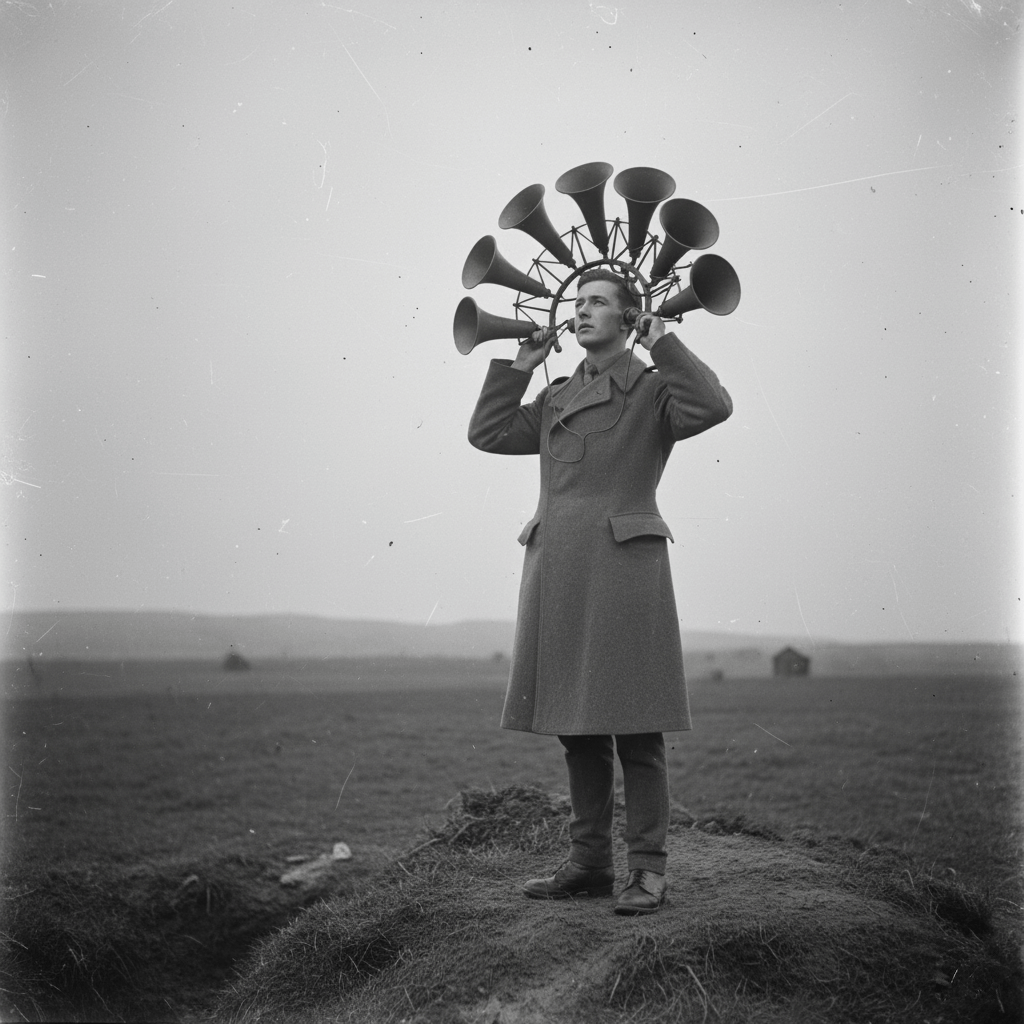
About the Aircraft Listener Profession
The role of an Aircraft Listener emerged in the mid-20th century, primarily during the Post-War Era, when aviation technology was rapidly advancing and air traffic was increasing significantly. Aircraft Listeners were tasked with monitoring and interpreting the sounds of aircraft engines, particularly in military contexts, where understanding the nuances of engine noise could indicate the type of aircraft, its operational status, and even potential mechanical issues. This job was crucial for military intelligence and air traffic control, as it provided valuable information about aircraft movements and capabilities without the need for visual confirmation.
Listeners would often work in pairs or small teams, stationed at strategic locations such as airbases or observation posts. They utilized their acute hearing to distinguish between different aircraft types, noting variations in sound that could indicate changes in speed, altitude, or engine performance. This auditory skill was honed through extensive training and experience, as the ability to identify aircraft by sound alone was a rare and valuable talent.
The job required not only a keen ear but also a deep understanding of aviation technology and the specific characteristics of various aircraft engines. Listeners would often keep detailed logs of their observations, contributing to intelligence reports and operational assessments. The role was a blend of art and science, requiring both technical knowledge and an intuitive grasp of sound dynamics.
Day in the Life of an Aircraft Listener
Morning: The Early Shift
As dawn breaks, the Aircraft Listener arrives at the observation post, a small, soundproofed building equipped with specialized listening devices. The first task of the day involves reviewing the previous day's logs, noting any unusual sounds or patterns that may require further investigation. With a cup of coffee in hand, the Listener prepares for the day ahead, ensuring that all equipment is functioning properly.
Mid-Morning: Monitoring Operations
By mid-morning, the airspace is buzzing with activity. The Listener dons a pair of high-fidelity headphones, which amplify the sounds of the aircraft taking off and landing. With a notepad at the ready, they begin to identify the different aircraft by their unique sound signatures. Each roar of an engine is meticulously recorded, noting the time, type of aircraft, and any anomalies in sound that could indicate mechanical issues.
Afternoon: Team Collaboration
In the afternoon, the Listener collaborates with a small team of fellow listeners and technicians. They share findings and discuss any patterns observed throughout the day. This collaborative effort is crucial for building a comprehensive understanding of air traffic and ensuring that all potential issues are addressed. The team may also engage in training exercises, where they practice identifying new aircraft models or simulate emergency scenarios.
Evening: Reporting and Analysis
As the day winds down, the Listener compiles their observations into a detailed report. This report is submitted to military intelligence, providing insights into aircraft operations and any potential threats. The Listener reflects on the day's work, feeling a sense of accomplishment in contributing to national security through their unique auditory skills.
Night: On Call
Evenings can be unpredictable. The Listener may be called back to the observation post if there are reports of unusual aircraft activity. With the night sky as their backdrop, they remain vigilant, listening intently for any sounds that could indicate a breach of airspace or an emergency situation. The job requires constant readiness, as the safety of the airspace depends on their keen auditory perception.