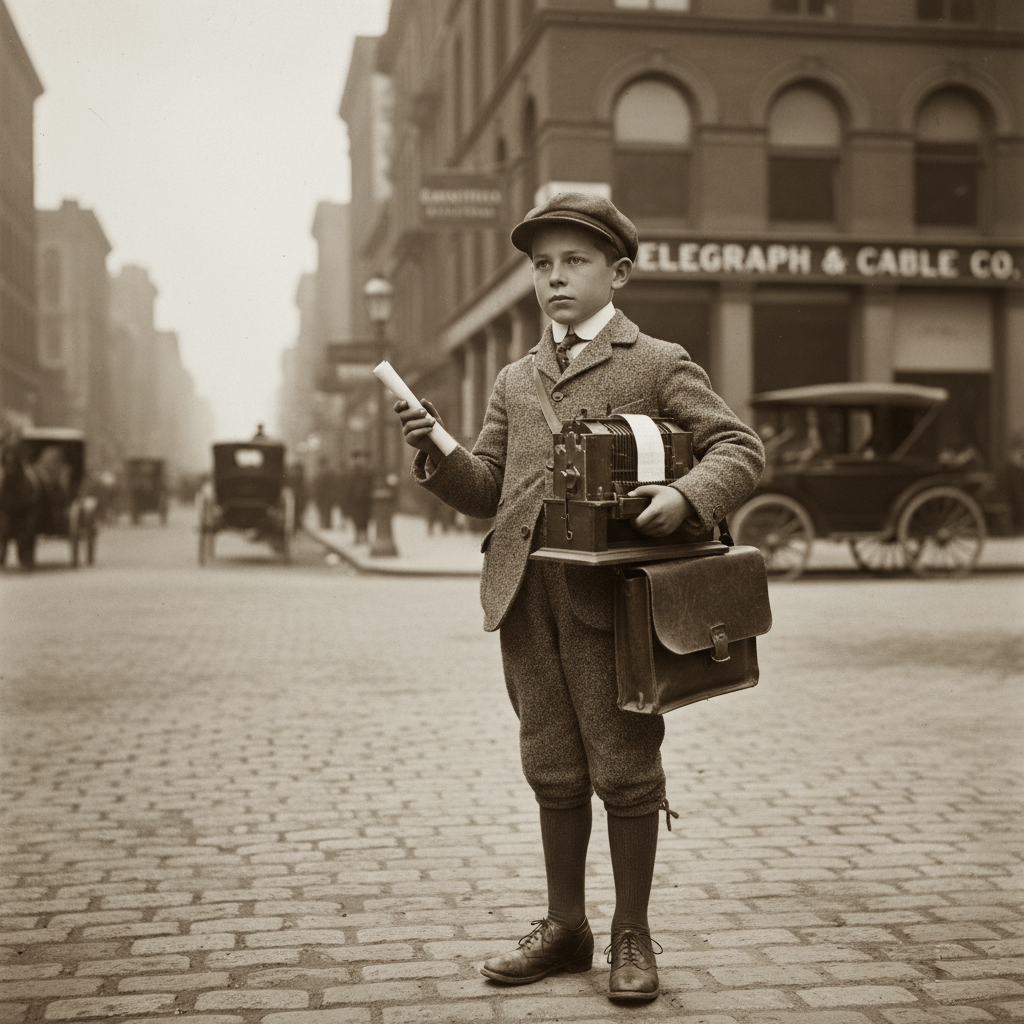
About the Telemark Boy Profession
The role of the Telemark Boy emerged during the Victorian Era, a time marked by rapid industrialization and the expansion of the British Empire. These young boys, typically between the ages of 10 and 15, were employed in the bustling telegraph offices that dotted cities and towns across the United Kingdom. Their primary responsibility was to assist telegraph operators by delivering messages and relaying information between offices and clients. The telegraph was a revolutionary technology of the time, allowing for near-instantaneous communication over long distances, and the Telemark Boys were essential to its operation.
Dressed in simple, often worn clothing, these boys navigated the busy streets, carrying messages in leather satchels. They were known for their speed and agility, darting through crowds and dodging horse-drawn carriages to ensure that messages reached their destinations promptly. The job required not only physical stamina but also a keen sense of direction and the ability to read and write, as they often had to transcribe messages before delivering them.
The social context of the era saw many children entering the workforce at a young age, often out of necessity due to family financial pressures. The work of a Telemark Boy was seen as a stepping stone for many, providing them with a glimpse into the burgeoning world of communication and technology, while also exposing them to the harsh realities of child labor during this period.
Day in the Life of a Telemark Boy
Early Morning: Preparing for the Day
As dawn breaks, the Telemark Boy rises early, often before the sun has fully illuminated the streets. He dresses in his simple, worn clothes, grabs his leather satchel, and heads out to the telegraph office. The air is crisp, and the streets are quiet, but he knows that soon they will be bustling with activity.
Morning: The First Deliveries
Upon arriving at the telegraph office, the boy checks in with the telegraph operator, who hands him a stack of messages to deliver. He quickly scans the addresses, memorizing the routes he needs to take. With a sense of urgency, he sets off, weaving through the streets, dodging pedestrians and vehicles alike. His heart races as he delivers the first few messages, each one a vital link in the chain of communication.
Midday: Lunch Break
After a busy morning, the boy takes a brief respite at a nearby corner, where he shares a simple meal with other boys in similar positions. They exchange stories of their deliveries and the interesting people they’ve met along the way. This camaraderie provides a moment of relief from the demanding nature of their work.
Afternoon: More Deliveries and Challenges
The afternoon brings a new batch of messages, and the boy must navigate through the increasingly crowded streets. He encounters challenges, such as inclement weather or the occasional scuffle among street vendors. Each delivery is a race against time, and he learns to adapt quickly to the changing environment.
Evening: Wrapping Up the Day
As the sun begins to set, the boy returns to the telegraph office, where he reports back to the operator. He hands over any undelivered messages and recounts his day’s adventures. With the day’s work complete, he heads home, tired but proud of his contributions to the fast-paced world of telecommunication.