Victorian Era
Doll Eye Setter
An extinct profession from Victorian Era that became obsolete due to technological advancement and societal change.
Media Gallery
Image

Victorian Era
An extinct profession from Victorian Era that became obsolete due to technological advancement and societal change.
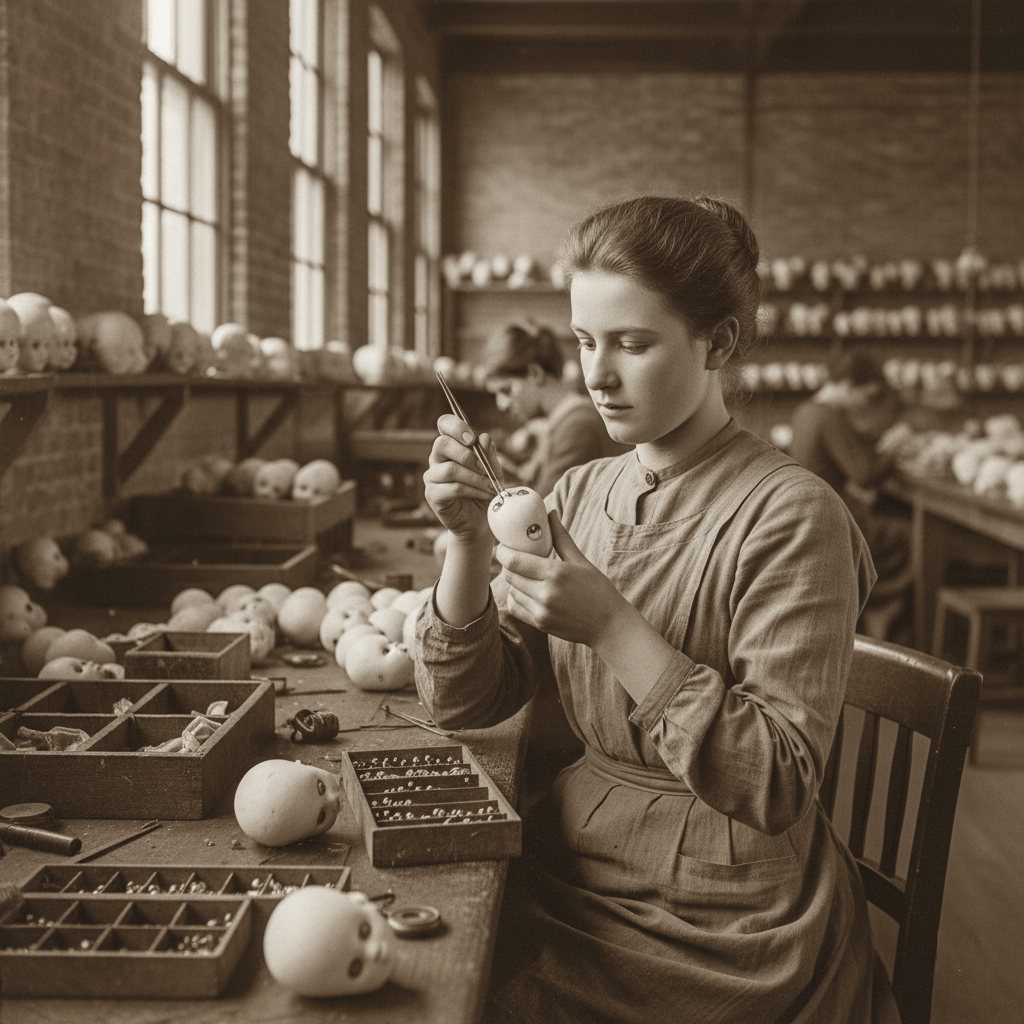
The role of a Doll Eye Setter was a specialized craft within the toy-making industry, particularly prominent during the Victorian Era (1837-1901). This occupation involved the meticulous task of inserting glass or plastic eyes into dolls, ensuring that each doll had a lifelike appearance. Doll Eye Setters worked primarily in factories or workshops, where they would receive unassembled dolls from doll makers. The eyes, often made of glass, were crafted in various sizes and colors to match the intended design of the doll. The setter would carefully position the eyes, often using a small tool to secure them in place, ensuring they were aligned perfectly to create an expressive gaze. This attention to detail was crucial, as the eyes were considered the windows to the doll's personality, enhancing its appeal to children and collectors alike.
The job required not only dexterity and precision but also an artistic eye for detail, as the placement of the eyes could significantly affect the doll's overall aesthetic. Doll Eye Setters often worked long hours, sometimes in poorly lit conditions, which could strain their eyesight. The work was repetitive, yet it required a steady hand and a keen sense of proportion to ensure that each doll was visually appealing.
As the demand for dolls surged during the Victorian Era, fueled by the rise of the middle class and the popularity of children's toys, the role of the Doll Eye Setter became increasingly important. However, as the 20th century approached, advancements in manufacturing processes, such as the introduction of mass production techniques and the use of plastic eyes that could be molded directly into the doll's head, rendered the specialized skills of the Doll Eye Setter obsolete. The shift towards automation and the decline of handcrafted toys led to the gradual disappearance of this once-essential occupation.
The day began early in the workshop, where the Doll Eye Setter would arrive to find a workspace filled with unassembled dolls and a variety of glass and plastic eyes. After donning protective eyewear to shield against glass shards, the setter would organize their tools, which included a small pair of tweezers, a needle, and a specialized eye-setting tool. The first task was to inspect the dolls for any defects and to select the appropriate eyes for each doll based on size and color.
Once the dolls were prepared, the setter would begin the delicate process of inserting the eyes. Using tweezers, they would carefully pick up a glass eye and position it into the doll's head, ensuring it was aligned correctly. This required a steady hand and a keen eye for detail, as even a slight misalignment could detract from the doll's appearance. The setter would often work on several dolls at once, moving from one to the next, ensuring efficiency while maintaining quality.
After the eyes were set, the Doll Eye Setter would conduct a quality check, examining each doll to ensure that the eyes were secure and properly positioned. Any dolls that did not meet the quality standards would be set aside for rework. Once the quality control was complete, the setter would apply finishing touches, such as adding eyelashes or painting the eyelids, to enhance the doll's lifelike appearance.
As the day wound down, the Doll Eye Setter would clean their workspace, carefully disposing of any broken glass and organizing tools for the next day. They would also take inventory of the completed dolls, preparing them for shipment to toy stores or distributors. This final task was crucial, as it ensured that the dolls would reach their destinations in perfect condition, ready to delight children and collectors alike.
The role of a Matchstick Girl emerged during the Victorian Era, a time marked by rapid industrialization and urbanization in Britain. These young girls, often as young as six years old, were employed to sell matches on the streets of cities like London. The job was not only a means of survival for the girls and their families but also a reflection of the harsh realities of the working class during this period. The matchstick girls were typically from impoverished backgrounds, and their earnings were crucial for their families' subsistence. They would often work long hours, braving the elements, to sell boxes of matches to passersby, including shopkeepers and households. The matches were sold at a low price, and the girls would often carry their wares in small baskets or bags, calling out to potential customers in hopes of making a sale. The work was grueling and dangerous; the girls were exposed to the elements, and many suffered from health issues due to malnutrition and the harsh conditions of street life. The matches themselves were often made with hazardous materials, leading to serious health risks, including phosphorus poisoning, which was a common affliction among those who worked with match production. Despite these dangers, the job was a vital source of income for many families, and the plight of the matchstick girls eventually drew public attention, leading to social reform movements aimed at improving working conditions for children.
The Encyclopedia Salesperson was a vital figure in the dissemination of knowledge during the mid-20th century, particularly in the Post-War Era, when families sought to educate their children in an increasingly complex world. These salespeople were often employed by publishing companies that produced encyclopedias, which were considered essential household items. The role involved not only selling books but also acting as a trusted advisor to families, guiding them through the vast array of information available. Encyclopedia Salespersons would typically visit homes, demonstrating the value of their products through engaging presentations. They would highlight the importance of having a comprehensive reference library, especially in an age where education was becoming more accessible and valued. The sales pitch often included a demonstration of how to find information quickly and effectively, showcasing the encyclopedias as indispensable tools for learning and research. In addition to selling, these individuals were responsible for maintaining relationships with customers, providing follow-up support, and sometimes even offering additional educational materials. Their work was characterized by a strong emphasis on personal interaction, as they built rapport with families and understood their specific educational needs.
Discover the full collection of past and future professions in The Jobs Museum.