Industrial Revolution
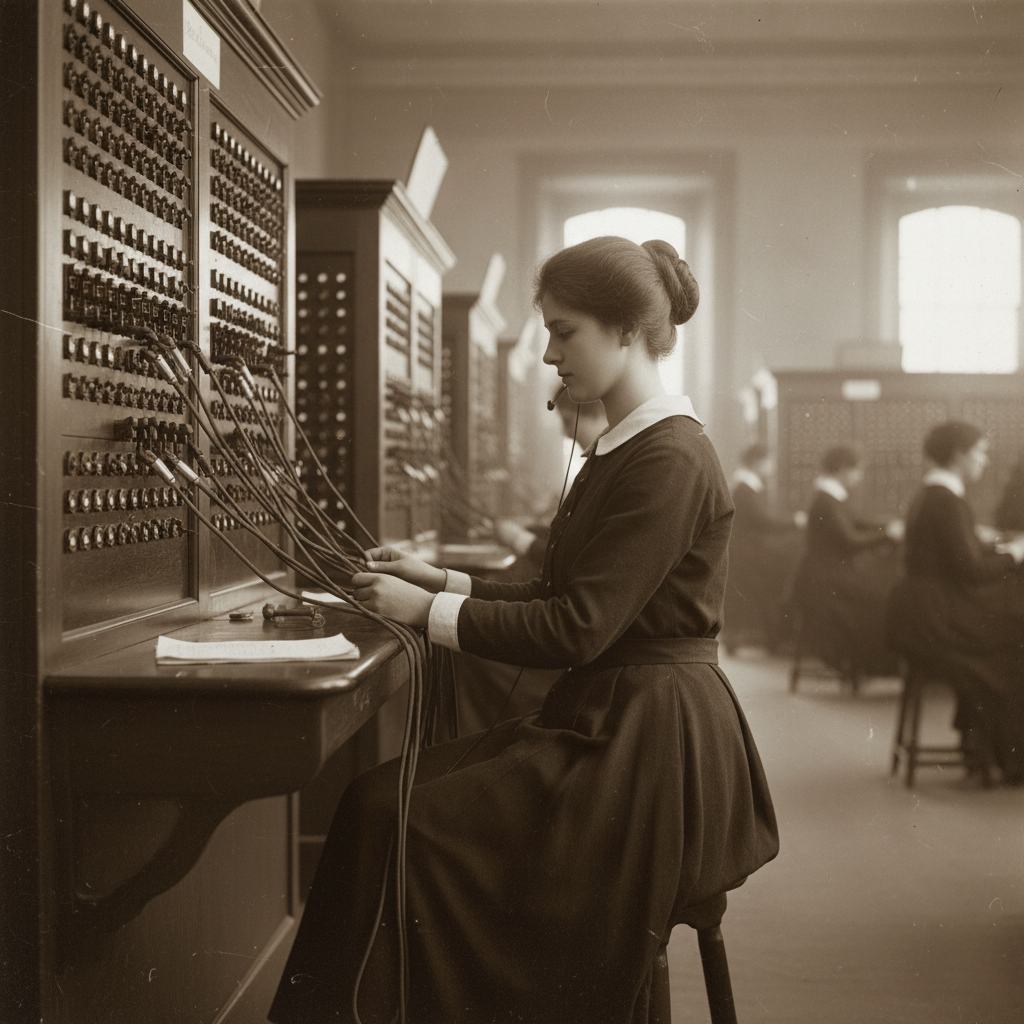
Switchboard Operator
An extinct profession from Industrial Revolution that became obsolete due to technological advancement and societal change.
Media Gallery
Image

Industrial Revolution
An extinct profession from Industrial Revolution that became obsolete due to technological advancement and societal change.
In the bustling world of the late 19th and early 20th centuries, the role of the switchboard operator emerged as a vital cog in the machinery of communication. These skilled individuals were the unsung heroes of the telephone network, connecting calls and facilitating conversations that bridged distances and brought people together. With the advent of the telephone, the need for a human intermediary became apparent, and thus, the switchboard operator took center stage in the realm of telecommunications.
Switchboard operators worked in large, often crowded rooms filled with rows of switchboards, each adorned with a myriad of plugs and wires. Their primary responsibility was to connect callers by manually plugging and unplugging telephone lines into the appropriate jacks on the switchboard. This intricate dance of wires required not only dexterity but also a keen ear for voices and an ability to quickly assess and respond to the needs of callers. Operators were often the first point of contact for individuals seeking to connect with friends, family, or businesses, making their role both crucial and highly regarded.
The job was not without its challenges. Operators had to manage multiple calls simultaneously, often dealing with a cacophony of voices and requests. They were trained to handle emergencies, providing vital assistance during crises, such as connecting calls to hospitals or fire departments. The work environment was typically fast-paced and required a high level of concentration, as even a small mistake could lead to misdirected calls or delays in communication.
As technology advanced, the role of the switchboard operator began to wane. The introduction of automated switching systems in the mid-20th century marked the beginning of the end for this once-essential occupation. These systems could connect calls without human intervention, leading to a decline in demand for operators. By the 1980s, the role had largely disappeared, replaced by automated systems that could handle the volume of calls with greater efficiency and reliability.
The day begins early for a switchboard operator, who arrives at the telephone exchange to find the room buzzing with activity. The operator takes their place at the switchboard, a large panel filled with numerous jacks and plugs, each representing a different telephone line. As the clock strikes eight, the first calls start to come in. The operator greets each caller with a friendly tone, ready to assist them in connecting to their desired party.
As lunchtime approaches, the volume of calls increases dramatically. The operator must juggle multiple connections, quickly plugging and unplugging wires while maintaining a calm demeanor. They listen intently, often having to repeat names or numbers to ensure accuracy. During this hectic period, the operator's skills are put to the test, as they navigate the demands of the callers while keeping track of the busy switchboard.
In the afternoon, the pace begins to slow, but the operator remains vigilant. They take time to assist with special requests, such as connecting emergency calls or providing information to callers. The operator also engages in light conversation with colleagues, sharing stories and laughter amidst the hum of the switchboard. As the day winds down, they prepare for the final rush of calls before closing time.
As the clock nears six, the operator completes the last of the calls, ensuring that all connections are properly logged. They tidy their workspace, unplugging any remaining lines and preparing for the next day. With a sense of accomplishment, the operator leaves the exchange, having played a crucial role in connecting people throughout the day.
The milkman was a familiar figure in the neighborhoods of the 20th century, a symbol of a time when fresh dairy products were delivered directly to homes. Clad in a crisp uniform, often with a cap, the milkman would rise before dawn, preparing for a day of delivering fresh milk, cream, and other dairy products to families. The job was not merely about transportation; it was a vital service that ensured households received their daily supply of milk, often still warm from the farm. The milkman would navigate his route, typically using a horse-drawn cart or later, a motor vehicle, stopping at each home to leave bottles of milk on doorsteps, often exchanging empty bottles from the previous delivery. This daily ritual fostered a sense of community, as the milkman became a trusted figure, known by name to the families he served. The job required not only physical stamina but also a keen sense of time management and customer service, as the milkman had to maintain a strict schedule to ensure freshness and reliability.
The role of a pinner was crucial in the textile industry, particularly before the advent of mechanized production. Pinners were skilled artisans responsible for the intricate task of pinning fabric pieces together before they were sewn into garments. This job required a keen eye for detail and a steady hand, as the precision of the pinning process directly influenced the quality of the final product. Pinners worked primarily in workshops or at home, often in close-knit communities where they would collaborate with seamstresses and tailors. The work was labor-intensive and required a deep understanding of fabric types, patterns, and garment construction. Pinners used a variety of pins, including straight pins and safety pins, to hold fabric in place, ensuring that seams aligned perfectly and that the finished garments fit well. The role was often filled by women, who contributed significantly to the family income through this work, especially in urban areas where the textile industry thrived. As the demand for clothing increased, so did the need for skilled pinners, making this occupation a vital part of the pre-industrial economy.
Discover the full collection of past and future professions in The Jobs Museum.