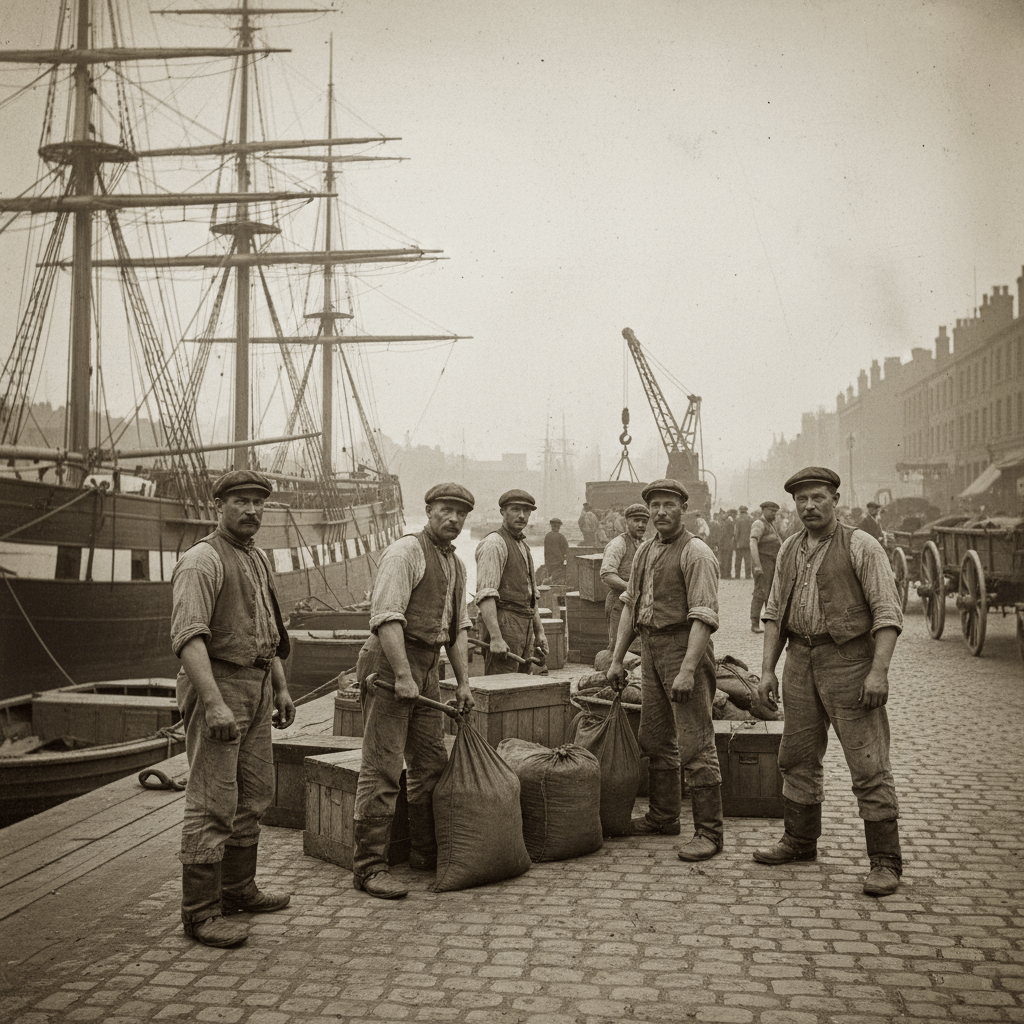
About the Stevedore Profession
The stevedore, often referred to as a longshoreman, was a vital figure in the shipping industry during the Industrial Revolution and beyond. These laborers were responsible for the loading and unloading of cargo from ships, a task that required not only physical strength but also a keen understanding of maritime operations. Stevedores worked in bustling ports, where the clamor of ships, the shouts of dockworkers, and the creaking of cargo nets created a symphony of industry. They were the backbone of trade, ensuring that goods moved efficiently from sea to shore and vice versa.
The work of a stevedore was physically demanding and often dangerous. They operated in all weather conditions, lifting heavy crates and barrels, often using tools such as hooks, slings, and winches. The stevedore's role was not merely about brute strength; it also required coordination and teamwork, as they worked alongside ship captains, dock managers, and other laborers to ensure that cargo was handled safely and efficiently. The stevedore's expertise in stowing cargo was crucial, as improper loading could lead to accidents at sea or damage to goods.
As the shipping industry evolved, so too did the role of the stevedore. The introduction of containerization in the mid-20th century revolutionized cargo handling, leading to a decline in the traditional stevedore's role. Containers allowed for faster loading and unloading, reducing the need for manual labor and specialized skills that stevedores had honed over decades. This shift marked the beginning of the end for the stevedore as a distinct occupation, as automation and mechanization took over the docks.
Day in the Life of a Stevedore
Early Morning: Preparing for the Day
The day often began before dawn, with stevedores arriving at the docks to prepare for the day’s work. They would gather in groups, discussing the day’s cargo and any special instructions from the dock foreman. After donning their heavy work boots and gloves, they would inspect their tools, ensuring that everything from hooks to slings was in good condition.
Morning: Loading and Unloading
As the sun rose, the stevedores would begin their tasks. They worked in teams, coordinating their efforts to unload cargo from incoming ships. Using cranes and winches, they would lift heavy crates and barrels, carefully maneuvering them onto the dock. Communication was key, as they shouted instructions to one another over the noise of machinery and the crashing waves. Each stevedore had a specific role, whether it was operating the winch, guiding the cargo, or stacking it on the dock.
Midday: Break and Strategy
After several hours of intense labor, the stevedores would take a break, often sharing a meal together. This was a time for camaraderie, where stories were exchanged, and strategies for the afternoon’s work were discussed. They would also take the opportunity to hydrate and rest their weary muscles before returning to the demanding tasks ahead.
Afternoon: Stowing Cargo
In the afternoon, the stevedores would shift their focus to loading cargo onto departing ships. This required careful planning and knowledge of the ship’s layout to ensure that weight was distributed evenly. They would work tirelessly, often in cramped quarters, to stow goods securely, using ropes and nets to prevent shifting during transit. The stevedores’ expertise in this area was critical to the safety of the ship and its cargo.
Evening: Wrapping Up
As the sun set, the stevedores would finish their tasks, often exhausted but satisfied with a day’s hard work. They would clean their tools and report to the foreman, discussing any issues that arose during the day. After a long day on the docks, they would head home, ready to rest and prepare for another day of labor.