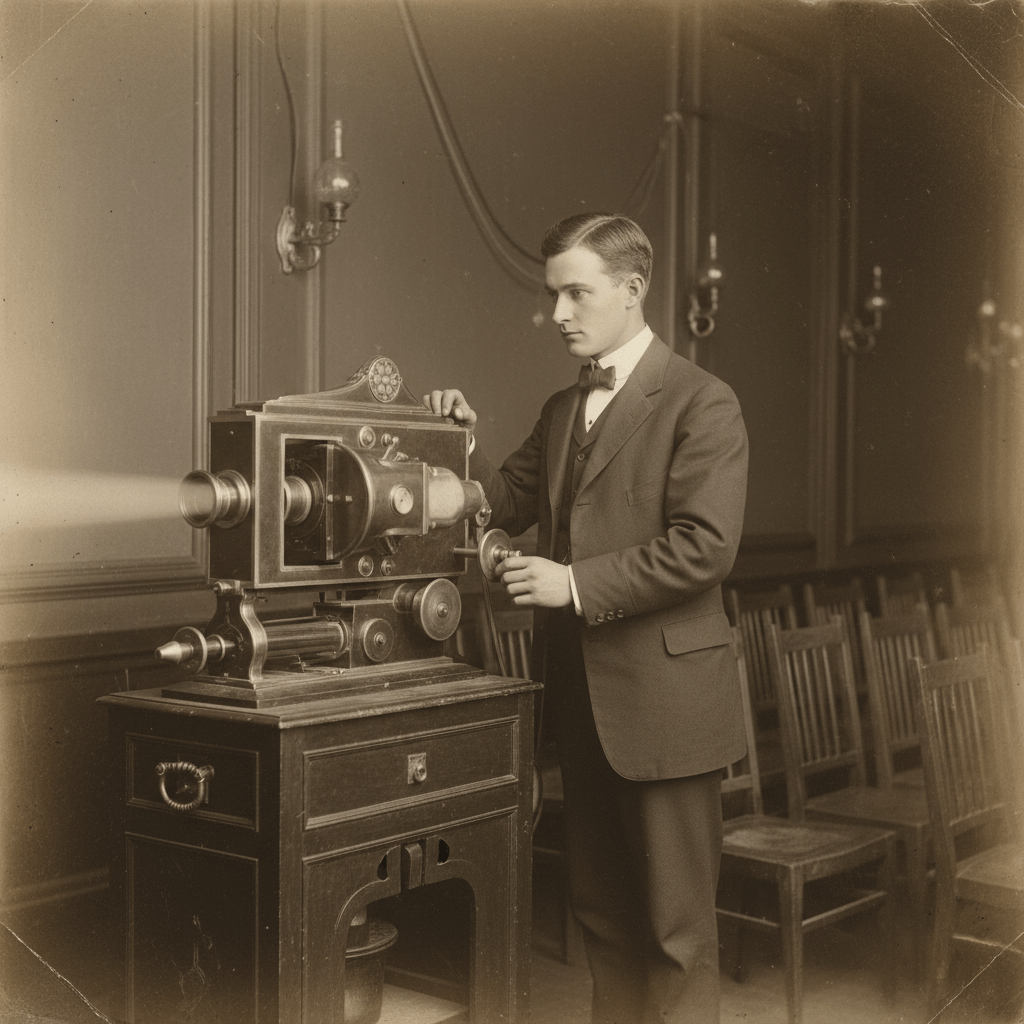
About the Vitascope Operator Profession
The Vitascope Operator was a pioneering figure in the early days of cinema, responsible for operating the Vitascope, one of the first commercially successful motion picture projectors. This role emerged in the late 19th century, during a time when the world was captivated by the novelty of moving images. The Vitascope, developed by Thomas Edison and his team, allowed for the projection of short films to audiences in theaters, marking a significant leap in entertainment technology. Operators were tasked with not only running the machine but also ensuring that the film was threaded correctly, maintaining the right speed, and managing the light source to create a clear image on the screen. The job required a blend of technical skill and showmanship, as operators often had to engage with the audience, enhancing the viewing experience with commentary or sound effects. The excitement of the flickering images and the communal experience of watching films in a darkened theater made the role of the Vitascope Operator a vital part of the early film industry.
Day in the Life of a Vitascope Operator
Morning Preparation
The day began early for a Vitascope Operator, often around 8 AM. After arriving at the theater, the operator would check the equipment, ensuring that the Vitascope projector was in good working order. This involved cleaning the lenses, checking the film reels for any damage, and preparing the light source, typically an arc lamp, which required careful handling due to its intensity.
Afternoon Showings
By noon, the operator would be ready for the first show of the day. As the audience settled into their seats, the operator would thread the film through the projector, making sure it was aligned correctly to avoid any jams. Once the lights dimmed, the operator would start the projector, carefully adjusting the speed to ensure a smooth projection. During the show, the operator had to remain vigilant, watching for any issues with the film or the projector, ready to intervene if something went wrong.
Evening Performances
The evening was the busiest time for a Vitascope Operator, with multiple showings scheduled. Between shows, the operator would often engage with the audience, sharing anecdotes about the films or the technology behind the Vitascope. This interaction was crucial in building a rapport with the audience, as many were experiencing moving pictures for the first time. After the final show, the operator would carefully rewind the film and store it properly, ensuring it was ready for the next day.
Closing Duties
After the last audience member left, the operator would conduct a final check of the equipment, cleaning the projector and preparing it for the next day. This could take an additional hour, often leading to long days that could stretch from morning until late at night.