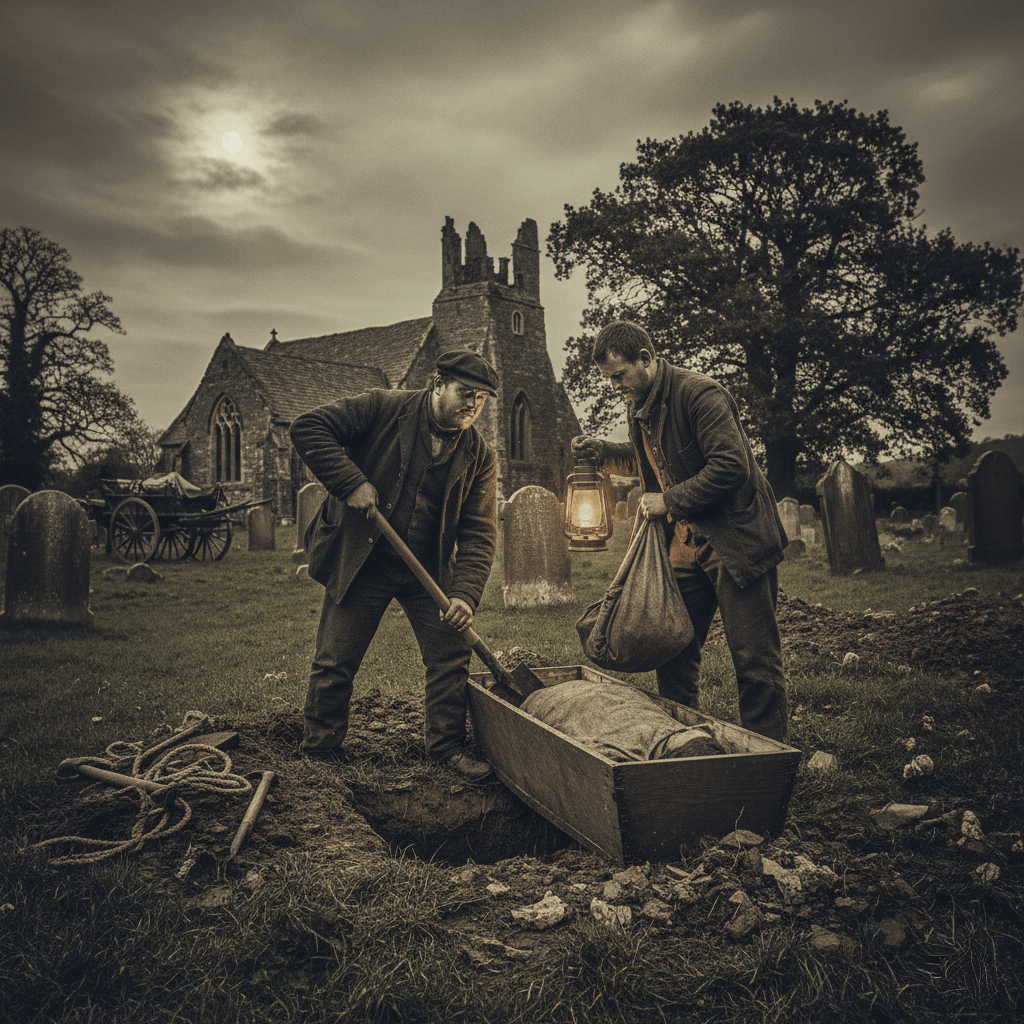
About the Resurrectionist Profession
The role of a resurrectionist, often referred to as a body snatcher, emerged in the early 19th century during a time when the demand for cadavers for medical research and education far exceeded the supply. In an era where the study of human anatomy was gaining prominence, medical schools required fresh specimens for dissection, but legal restrictions limited the availability of bodies. Resurrectionists operated in the shadows, exhuming recently buried corpses from graveyards and selling them to medical institutions. This clandestine occupation was fraught with moral and legal dilemmas, as it often involved the desecration of graves and the exploitation of the deceased's families. Despite the grim nature of their work, resurrectionists played a crucial role in advancing medical knowledge, albeit through highly controversial means. Their activities sparked public outrage and led to significant legal reforms regarding the procurement of cadavers, ultimately transforming the landscape of medical education.
Day in the Life of a Resurrectionist
Early Morning: Preparation and Planning
As dawn breaks, a resurrectionist begins their day in the dim light of their modest dwelling. They gather their tools, which typically include a shovel, a pickaxe, and a lantern. The resurrectionist must also don dark, inconspicuous clothing to blend into the shadows of the graveyard. Before heading out, they review their list of potential targets—graves of recently deceased individuals, often marked by fresh earth or recent funerals. The resurrectionist must be discreet, as the act of body snatching is illegal and punishable by law.
Late Morning: The Graveyard
Arriving at the graveyard, the resurrectionist carefully surveys the area, ensuring that no one is watching. They select a grave and begin the laborious task of digging. The work is physically demanding and requires strength and endurance, as the resurrectionist must excavate several feet of earth to reach the coffin. The sound of the shovel striking the ground is muffled by the stillness of the morning, and the resurrectionist must remain alert for any signs of approaching visitors or graveyard keepers.
Afternoon: The Extraction
Once the coffin is unearthed, the resurrectionist pries it open, often using a crowbar. The sight of the body can be unsettling, but the resurrectionist is accustomed to the grim reality of their work. They carefully extract the body, ensuring minimal damage to the remains, as the condition of the corpse can affect its value to medical schools. After securing the body, they re-bury the coffin to cover their tracks, leaving no evidence of their illicit activities.
Evening: The Sale
With the body concealed, the resurrectionist makes their way to a pre-arranged meeting point with a medical professional or a representative from a medical school. The transaction is typically conducted in secrecy, with payment exchanged for the body. The resurrectionist may earn a significant sum for their efforts, as the demand for fresh cadavers is high. However, the risk of being caught looms over every transaction, adding a layer of tension to their daily life.
Night: Reflection and Caution
After a long day, the resurrectionist returns home, exhausted but aware of the moral implications of their work. They may reflect on the lives of those they have disturbed, grappling with the ethical dilemmas of their profession. As the night deepens, they remain vigilant, knowing that the authorities are cracking down on body snatching, and the future of their occupation hangs in the balance.