About the Moirologist Profession
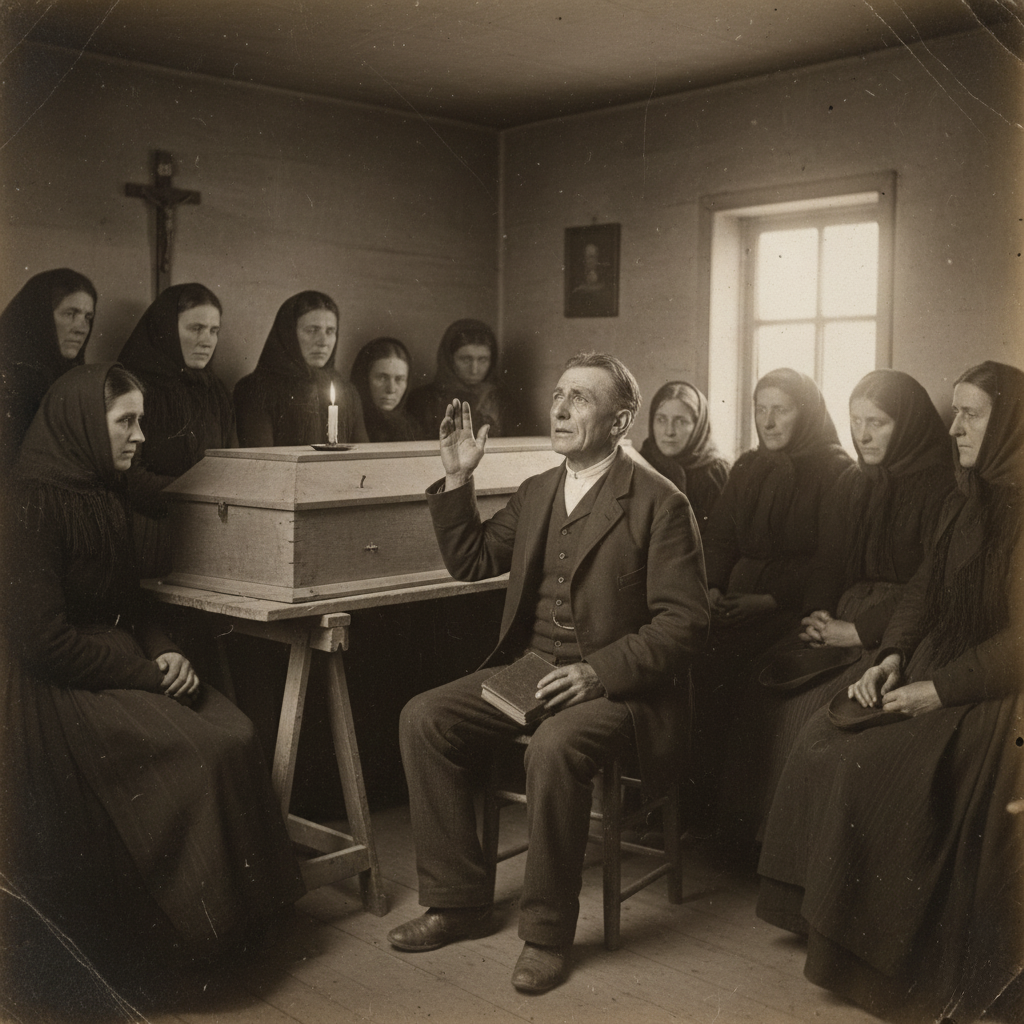
The moirologist, a term derived from the Greek word 'moirologia' meaning 'to lament,' was a specialized profession that emerged during the Victorian Era, particularly in the 19th century. These individuals were skilled mourners, often hired to express grief at funerals and memorial services. Their role was to provide a public display of sorrow, which was considered an essential part of the mourning process in a society that placed great emphasis on the rituals surrounding death. Moirologists were often women, who would don black attire and engage in elaborate displays of mourning, including weeping, wailing, and reciting elegies or poems that honored the deceased. Their presence was thought to enhance the emotional atmosphere of the funeral, allowing the bereaved family to feel supported in their grief.
In addition to their emotional labor, moirologists were also expected to have a deep understanding of the customs and traditions surrounding death, including the appropriate attire, behavior, and rituals that were expected in various social contexts. They often worked alongside funeral directors and were an integral part of the mourning culture of the time, which was characterized by elaborate funerals and a public display of grief.
Day in the Life of a Moirologist
Morning: Preparation and Reflection
A moirologist's day often began early, with the morning dedicated to preparing for the day's events. This involved selecting the appropriate mourning attire, which typically consisted of black dresses, veils, and accessories that signified grief. The moirologist would spend time reflecting on the life of the deceased, researching their background, and preparing any elegies or poems that would be recited during the service. This preparation was crucial, as it allowed the moirologist to connect authentically with the family and the community.
Midday: Attending the Funeral
As the funeral approached, the moirologist would arrive at the venue, often a church or the deceased's home, well ahead of the scheduled time. They would greet the family and offer their condolences, establishing a rapport that would help guide the emotional tone of the service. During the funeral, the moirologist would take center stage, leading the mourners in expressions of grief. This could include vocal lamentations, physical displays of sorrow, and the recitation of poignant poetry that resonated with the life and legacy of the deceased. Their role was to evoke a collective mourning experience, allowing attendees to process their grief in a communal setting.
Afternoon: Post-Funeral Support
After the funeral, the moirologist often remained available to the family for a period of time, providing support and guidance as they navigated their grief. This could involve attending a wake or gathering where mourners would share stories and memories of the deceased. The moirologist's presence was a comforting reminder of the shared sorrow, and they would often help facilitate conversations about loss and remembrance.
Evening: Reflection and Documentation
As the day came to a close, the moirologist would return home to reflect on the day's events. They might document their experiences, noting the emotional responses of the family and the community, which could inform their future work. This reflection was not only a personal practice but also a way to improve their craft, ensuring that they could provide the most authentic and supportive experience for future clients.