
Industrial Revolution
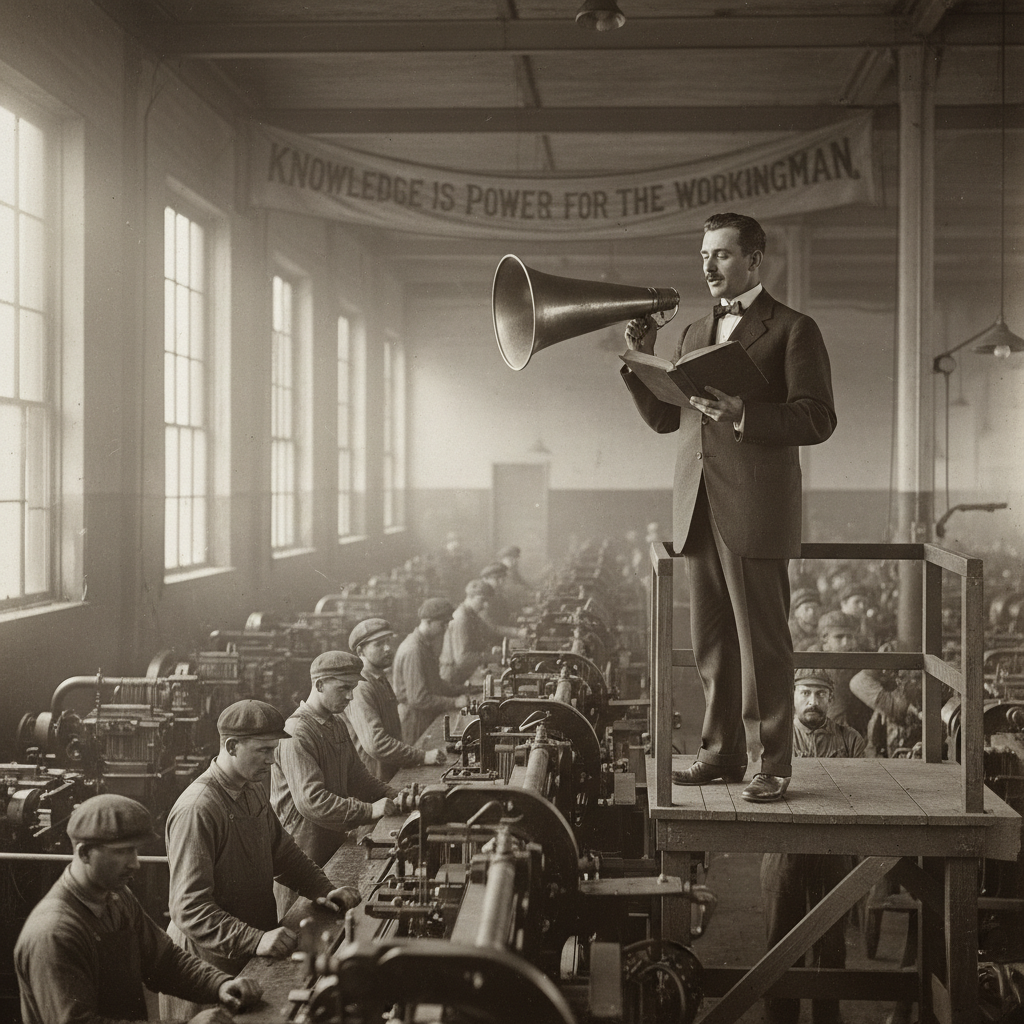
Lector
An extinct profession from Industrial Revolution that became obsolete due to technological advancement and societal change.
Media Gallery
Related Exhibits
Calligrapher
The art of calligraphy, often referred to as 'beautiful writing,' flourished during the Medieval Period, where skilled calligraphers played a crucial role in the preservation and dissemination of knowledge. These artisans were not merely writers; they were artists who transformed the written word into a visual spectacle. Calligraphers were responsible for creating manuscripts, religious texts, and important documents, often using intricate scripts that varied by region and purpose. Their work was characterized by the use of quills, ink, and parchment, and they often employed elaborate techniques such as gilding and illumination to enhance their creations. The calligrapher's role was not only to write but to imbue each piece with a sense of beauty and reverence, making their work essential in an era where printed materials were scarce and literacy was a privilege of the few.
Coal Stoker
The coal stoker was a vital role during the Industrial Revolution, responsible for feeding coal into steam boilers that powered locomotives, ships, and factories. These workers were the unsung heroes of the industrial age, ensuring that the engines of progress ran smoothly. The job required physical strength and endurance, as stokers often worked in hot, cramped, and dark conditions, shoveling coal into the fireboxes of boilers to maintain the necessary temperature for steam production. The stoker's work was crucial for the operation of steam engines, which were the backbone of industrial transportation and manufacturing during this period. The job was labor-intensive and often dangerous, with workers exposed to high temperatures, coal dust, and the risk of burns or injuries from heavy equipment. Stokers were typically employed in coal-fired power plants, on ships, and in factories, where they played a key role in the efficiency of steam-powered machinery. As the Industrial Revolution progressed, the demand for coal stokers grew, but so did the mechanization of the industry, leading to significant changes in the workforce.
Explore More Exhibits
Discover the full collection of past and future professions in The Jobs Museum.