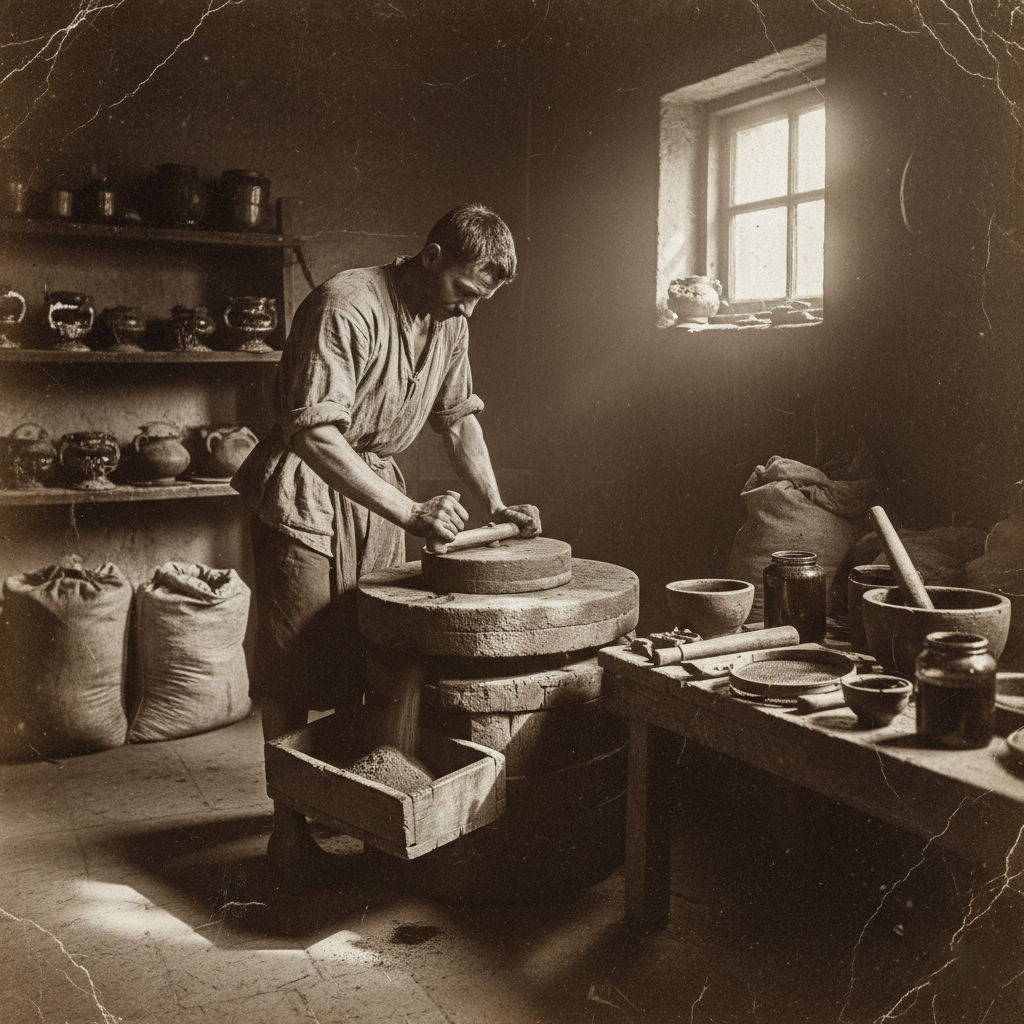
About the Lampblack Grinder Profession
In the bustling factories of the Industrial Revolution, the role of the Lampblack Grinder was both vital and hazardous. These skilled laborers were responsible for producing lampblack, a fine black powder made from soot, which was used as a pigment in inks, paints, and varnishes. The process involved collecting soot from burning oils or resins, then grinding it into a fine powder. The lampblack produced was prized for its deep, rich color and was essential for the burgeoning art and manufacturing industries of the time.
The work environment was often grimy and poorly ventilated, with workers exposed to clouds of fine black dust that filled the air. Lampblack Grinders typically worked long hours, often in shifts that extended from dawn until dusk, in factories that were often overcrowded and lacked proper safety measures. Despite the health risks, including respiratory issues and skin irritations, the demand for lampblack surged as the use of oil lamps and paints became widespread during this era.
Lampblack Grinders were often men, but women and children also participated in this labor, particularly in smaller workshops. The job required not only physical strength to operate the grinding machinery but also a keen eye for quality, as the fineness of the powder directly affected its market value. As the Industrial Revolution progressed, the role of the Lampblack Grinder became increasingly important, yet perilous, as the soot they handled was not only a source of income but also a potential health hazard.
Day in the Life of a Lampblack Grinder
Early Morning: Preparing for Work
As dawn breaks, the Lampblack Grinder rises early, often before the sun has fully illuminated the sky. After a quick breakfast, he dons his work clothes, which are already stained with soot from previous days. He heads to the factory, where the air is thick with the smell of burning oil and the sound of machinery clanking fills the space.
Morning Shift: Grinding the Soot
Upon arrival, the Grinder begins his day by checking the grinding machines. He carefully loads the collected soot into the grinding apparatus, ensuring that the machinery is functioning properly. As the machines whir to life, he stands by, monitoring the process, adjusting the settings to achieve the desired fineness of the lampblack. The dust swirls around him, coating his skin and clothes in a layer of black powder.
Midday: Quality Control
After several hours of grinding, the Grinder takes a break to assess the quality of the lampblack produced. He scoops a sample into his hand, examining its texture and color. If it meets the standards, he prepares it for packaging; if not, he adjusts the grinding process and continues. This part of the job requires a discerning eye and a deep understanding of the material.
Afternoon: Packaging and Shipping
In the afternoon, the Lampblack Grinder shifts his focus to packaging the finished product. He fills bags with the fine powder, sealing them tightly to prevent spillage. Once packaged, he labels them for shipment to local artists, paint manufacturers, and other clients who rely on high-quality lampblack for their products. The work is labor-intensive, and he often collaborates with other workers to ensure efficiency.
Evening: Closing Up
As the day winds down, the Grinder cleans his workspace, sweeping up excess soot and ensuring that the machines are turned off and secured. He leaves the factory, his clothes and skin covered in soot, a testament to a hard day's work. He returns home, exhausted but proud of the essential role he plays in the production of a vital material for the growing industries of his time.