
Industrial Revolution
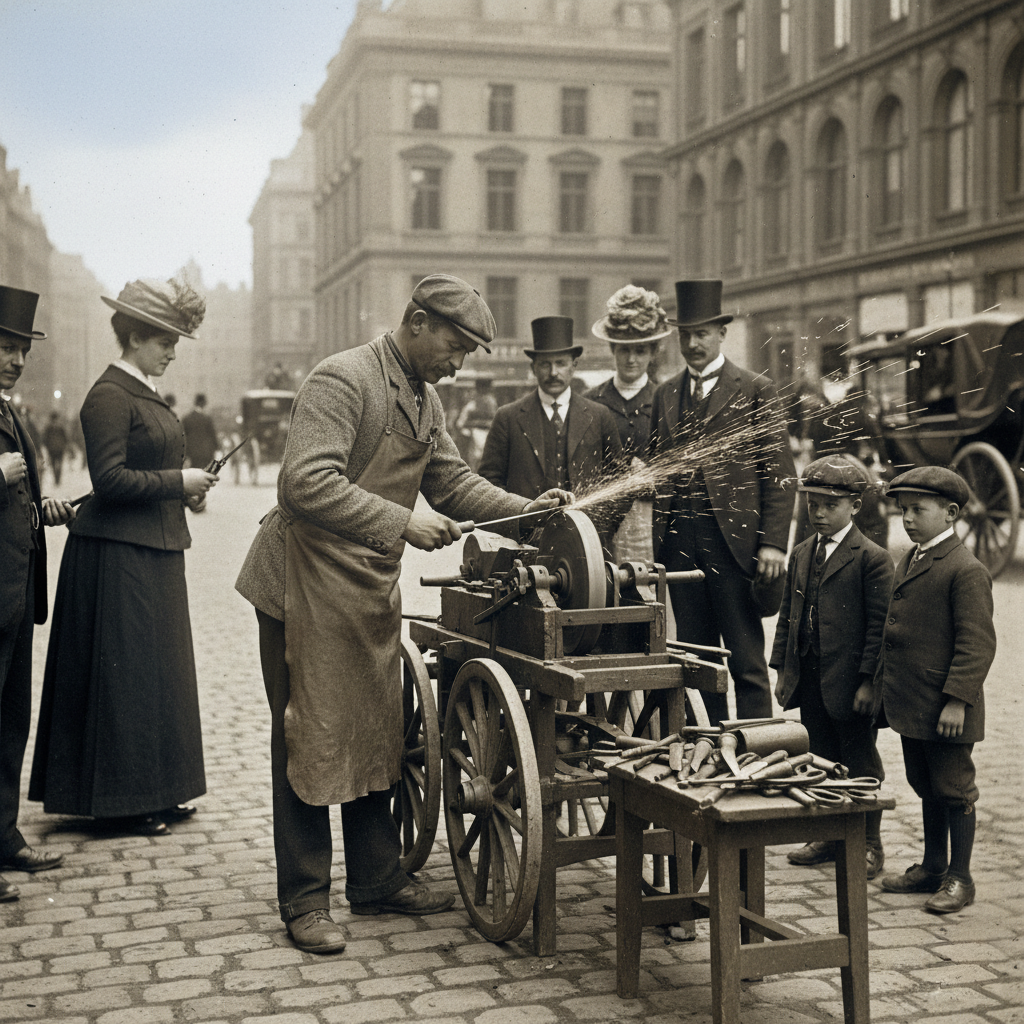
Knife Grinder
An extinct profession from Industrial Revolution that became obsolete due to technological advancement and societal change.
Media Gallery
Related Exhibits
Mudlark
The term 'mudlark' refers to individuals, often children or the impoverished, who scavenged the banks of rivers, particularly the River Thames in London, during the Victorian Era. These individuals would sift through the mud and debris left behind by the receding tide, searching for anything of value that could be sold or repurposed. The job was born out of necessity, as many families faced extreme poverty and relied on the meager earnings from scavenging to survive. Mudlarks would find items such as old coins, jewelry, pottery, and even discarded household goods, which they could sell to local traders or at markets. The work was physically demanding and often dangerous, as the muddy banks could be treacherous, and the waters of the Thames were known for their strong currents and pollution. Despite the harsh conditions, mudlarks played a crucial role in the urban economy, contributing to the recycling of materials long before the concept became mainstream.
Lector
The lector was a unique and fascinating occupation that emerged during the Industrial Revolution, particularly in the late 19th and early 20th centuries. This role was primarily found in cigar factories, where workers would spend long hours engaged in repetitive tasks. To alleviate the monotony and foster a sense of community, a lector would read aloud to the workers, providing them with entertainment, education, and a connection to the outside world. The readings often included literature, newspapers, and political essays, allowing workers to stay informed and engaged with current events while they toiled away. The lector was not merely a reader; they were a storyteller, a commentator, and sometimes even a social activist, using their platform to inspire and provoke thought among the laborers. This role was vital in creating a shared cultural experience among workers, fostering camaraderie and solidarity in an otherwise isolating environment.
Explore More Exhibits
Discover the full collection of past and future professions in The Jobs Museum.