
19th Century
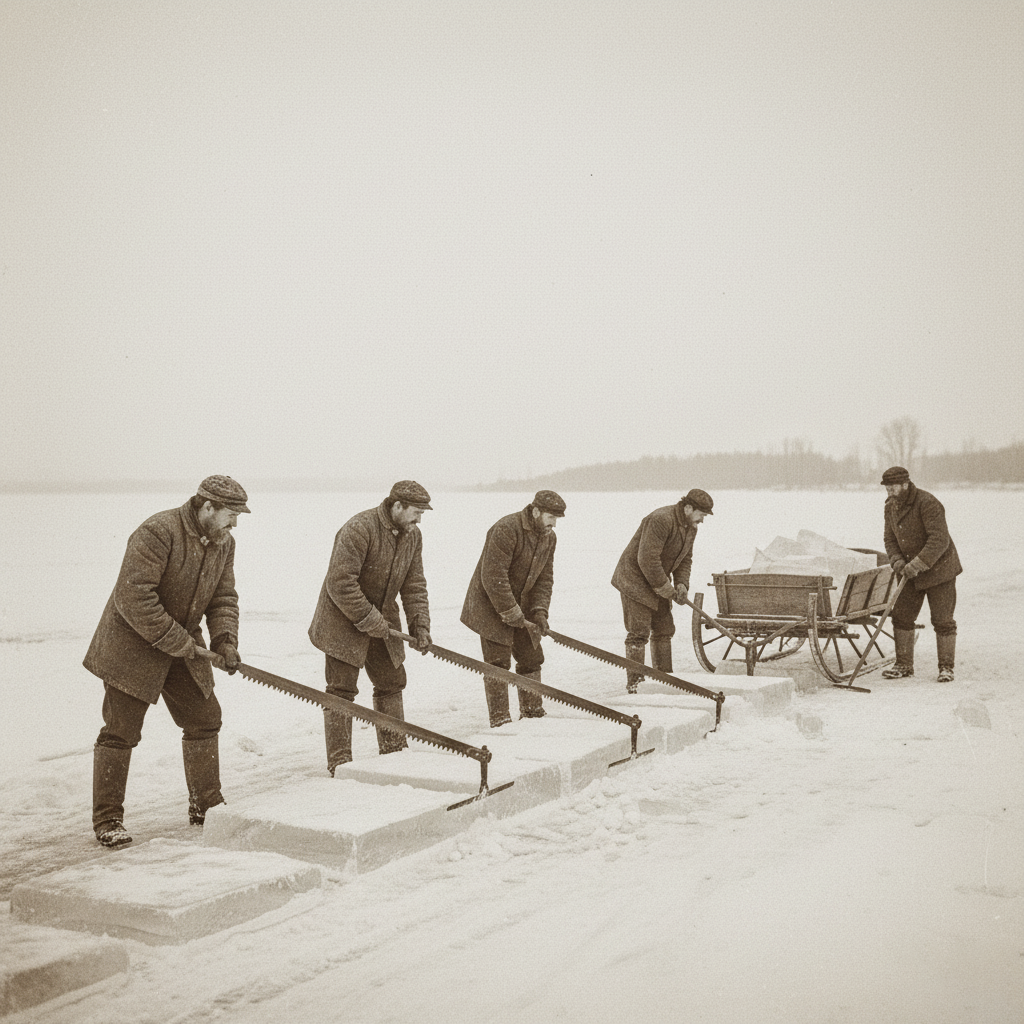
Ice Cutter
An extinct profession from 19th Century that became obsolete due to technological advancement and societal change.
Media Gallery
Related Exhibits
Ice Cream Freezer
The Ice Cream Freezer was a vital role in the production of one of the most beloved treats in history. Emerging during the Industrial Revolution, this occupation involved the manual freezing of ice cream mixtures, a process that required both skill and precision. Ice cream freezers were responsible for ensuring that the mixture reached the perfect consistency and temperature, creating a smooth and creamy texture that delighted consumers. They worked in ice cream parlors, factories, and even at fairs, where they would often be seen churning large batches of ice cream in traditional ice cream makers, surrounded by blocks of ice and salt, which were essential for the freezing process. The job required not only a keen understanding of the freezing process but also an ability to adapt to varying temperatures and ingredient qualities, making it a unique blend of art and science.
Typesetter
The role of a typesetter was pivotal in the evolution of printed communication, particularly during the Industrial Revolution. Typesetters were responsible for arranging the individual letters and characters of type to create pages of text for printing. This meticulous work required not only a keen eye for detail but also a deep understanding of typography and layout. Typesetters worked primarily in printing houses, where they would set type for newspapers, books, and other printed materials. The job involved selecting the appropriate typefaces, adjusting spacing, and ensuring that the text was aligned correctly. Each letter was cast in metal or made from wood, and typesetters would often work with a variety of fonts to achieve the desired aesthetic for each publication. The process was labor-intensive and required a high level of craftsmanship, as any errors in the typesetting could lead to costly mistakes in the final print.
Explore More Exhibits
Discover the full collection of past and future professions in The Jobs Museum.