
Pre-Industrial Era
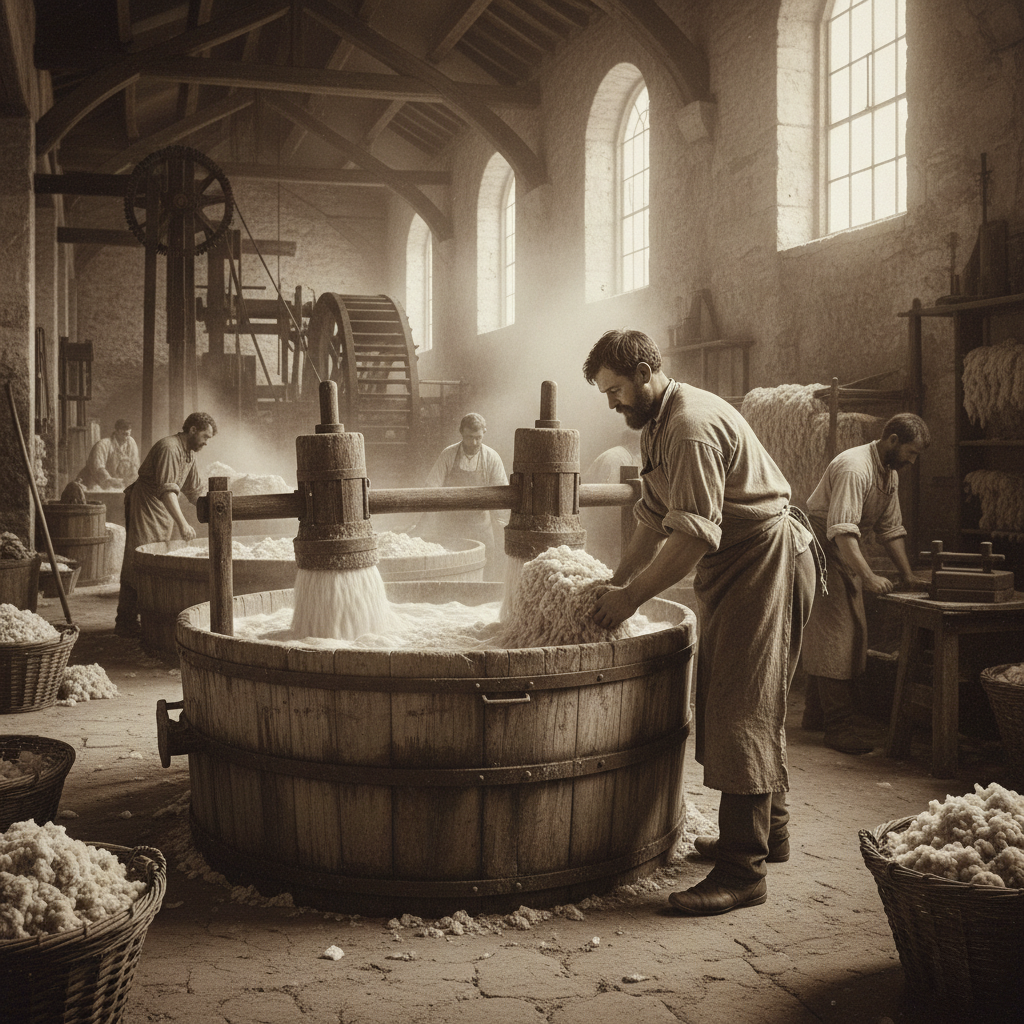
Fuller
An extinct profession from Pre-Industrial Era that became obsolete due to technological advancement and societal change.
Media Gallery
Related Exhibits
Lighthouse Keeper
The role of a lighthouse keeper was vital to maritime safety, particularly during the 19th century when shipping traffic surged due to industrialization and global trade. Lighthouse keepers were responsible for maintaining the light and ensuring that it was visible to passing ships, guiding them safely through treacherous waters. This job required a deep understanding of navigation, meteorology, and mechanical systems, as keepers often had to troubleshoot and repair the light mechanisms, which could include oil lamps or later, electric lights. The keeper's duties extended beyond just the light; they also maintained the lighthouse itself, kept records of weather conditions, and sometimes assisted in rescue operations for distressed vessels. The isolation of many lighthouses meant that keepers often lived in remote locations, sometimes with their families, fostering a unique community around these beacons of safety.
Ale Conner
The role of the Ale Conner was a vital one in medieval society, particularly in England, where ale was a staple beverage. Tasked with ensuring the quality of ale produced by local brewers, the Ale Conner acted as a guardian of public health and consumer rights. This position was often held by a local official or a member of the community who had the authority to inspect and taste ale before it was sold to the public. The Ale Conner would assess the ale for its strength, flavor, and overall quality, ensuring that it met the standards set by local regulations. If the ale was found to be subpar, the Ale Conner had the power to condemn it, preventing it from being sold and protecting the community from potential harm. In addition to quality control, the Ale Conner also played a role in the regulation of prices, ensuring that brewers did not exploit consumers by charging exorbitant rates for inferior products. This position was essential in maintaining the integrity of the ale market, which was a significant part of daily life in medieval towns and villages. The Ale Conner's work was not only about quality but also about fairness in trade, reflecting the communal values of the time.
Explore More Exhibits
Discover the full collection of past and future professions in The Jobs Museum.