
20th Century
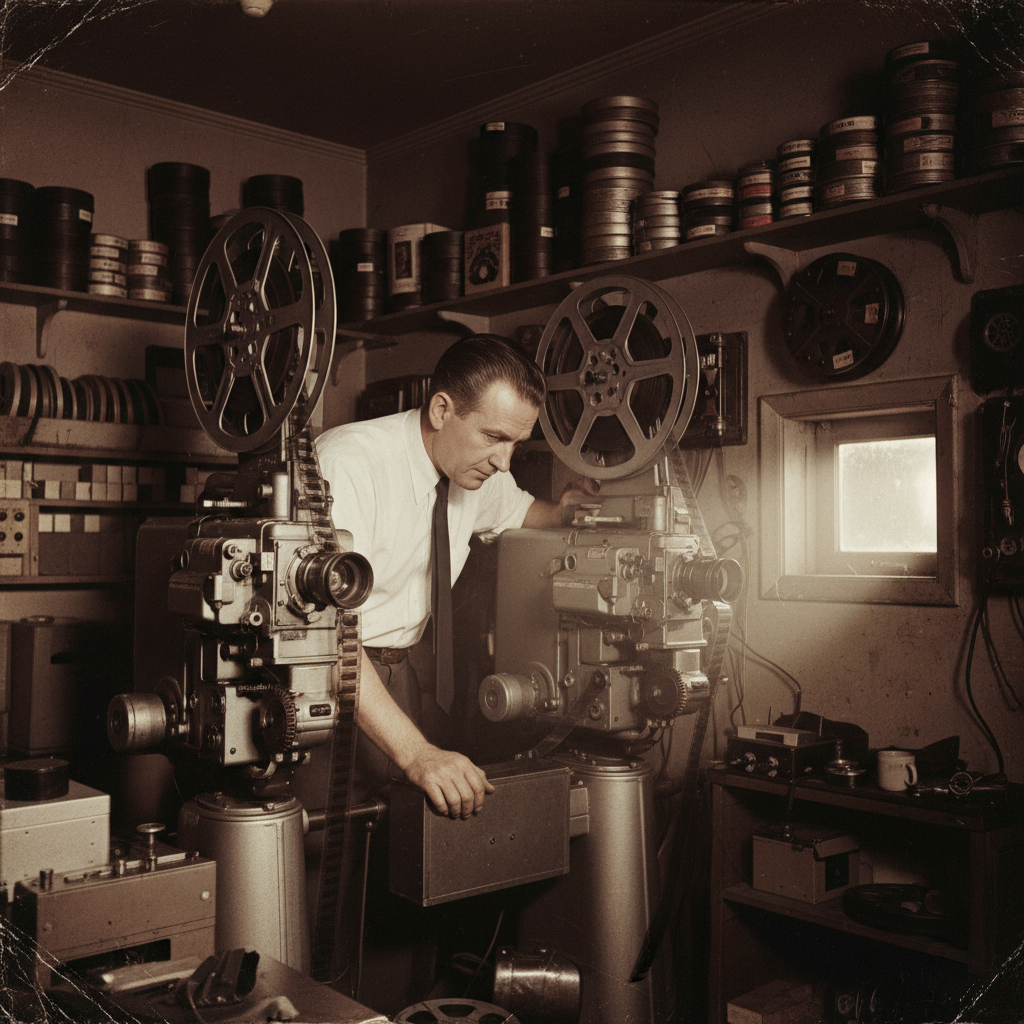
Film Projectionist
An extinct profession from 20th Century that became obsolete due to technological advancement and societal change.
Media Gallery
Related Exhibits
Radio Actor
The role of a radio actor was pivotal during the Golden Age of Radio, a time when families gathered around their radios to listen to serialized dramas, comedies, and news broadcasts. Radio actors were the voices behind beloved characters, bringing stories to life through their vocal talents alone. Unlike film or television, where visual elements play a significant role, radio actors relied solely on their voices to convey emotion, character, and narrative. They performed live or recorded scripts, often in front of a studio audience, and were skilled in various genres, from soap operas to thrillers. The ability to modulate their voices, create distinct characterizations, and engage listeners through sound alone was essential to their craft. Radio actors often worked with sound effects artists and musicians to enhance the auditory experience, creating a rich tapestry of sound that captivated audiences.
Pinsetter
In the bustling alleys of mid-20th century bowling alleys, the role of the pinsetter was a vital yet often overlooked occupation. Pinsetters were responsible for resetting the bowling pins after each frame, ensuring that the game could continue smoothly. This job required a keen eye and quick reflexes, as the pinsetter had to swiftly and accurately place the pins back in their designated spots while dodging the heavy bowling balls that rolled down the lane. The pinsetter's work environment was often loud and filled with the sounds of laughter, clattering pins, and the thud of bowling balls. They worked in dimly lit back rooms, often hidden from the view of the bowlers, where they operated a series of levers and pulleys to reset the pins. The job was physically demanding, requiring the pinsetter to be agile and strong enough to handle the heavy equipment used to lift and position the pins. As bowling grew in popularity during the 1950s and 1960s, the demand for pinsetters increased, making it a common sight in bowling alleys across America. However, the advent of automatic pinsetting machines in the late 1960s marked the beginning of the end for this once-essential role. These machines could reset pins faster and more efficiently than any human, leading to the gradual decline of the pinsetter profession.
Explore More Exhibits
Discover the full collection of past and future professions in The Jobs Museum.