
Victorian Era
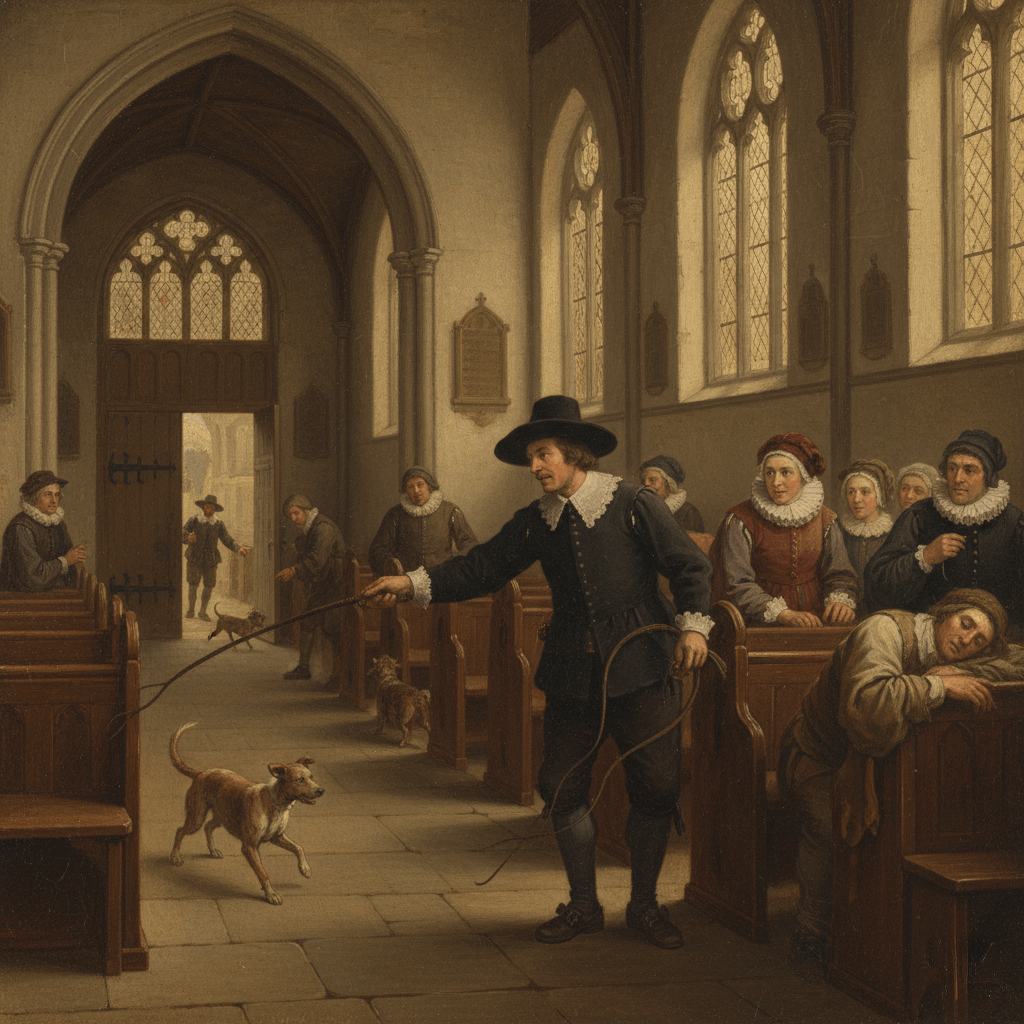
Dog Whipper
An extinct profession from Victorian Era that became obsolete due to technological advancement and societal change.
Media Gallery
Related Exhibits
Human Computer
The role of a Human Computer emerged in the early 20th century, primarily during the 1930s to the 1950s, as a response to the growing need for complex calculations in fields such as astronomy, engineering, and military applications. Human Computers were predominantly women who performed mathematical calculations by hand, often using pencil and paper, and later, mechanical calculators. They worked in teams, meticulously calculating trajectories for rockets, analyzing astronomical data, and solving intricate mathematical problems that were essential for scientific advancements. Their work was critical in the development of early computers, as they laid the groundwork for the algorithms and processes that would later be automated. These women, often referred to as "computers," were not only skilled mathematicians but also adept at problem-solving and critical thinking. They operated in environments that ranged from university laboratories to government research facilities, where they collaborated closely with scientists and engineers. The atmosphere was often intense, with deadlines looming and the pressure to produce accurate results being paramount. The Human Computer's role was not just about numbers; it was about precision, attention to detail, and the ability to work under pressure. They were the unsung heroes behind many scientific breakthroughs, including the early space missions and the development of radar technology during World War II. Their contributions were vital, yet often overlooked in the historical narrative of computing and mathematics.
Explore More Exhibits
Discover the full collection of past and future professions in The Jobs Museum.