
Victorian Era
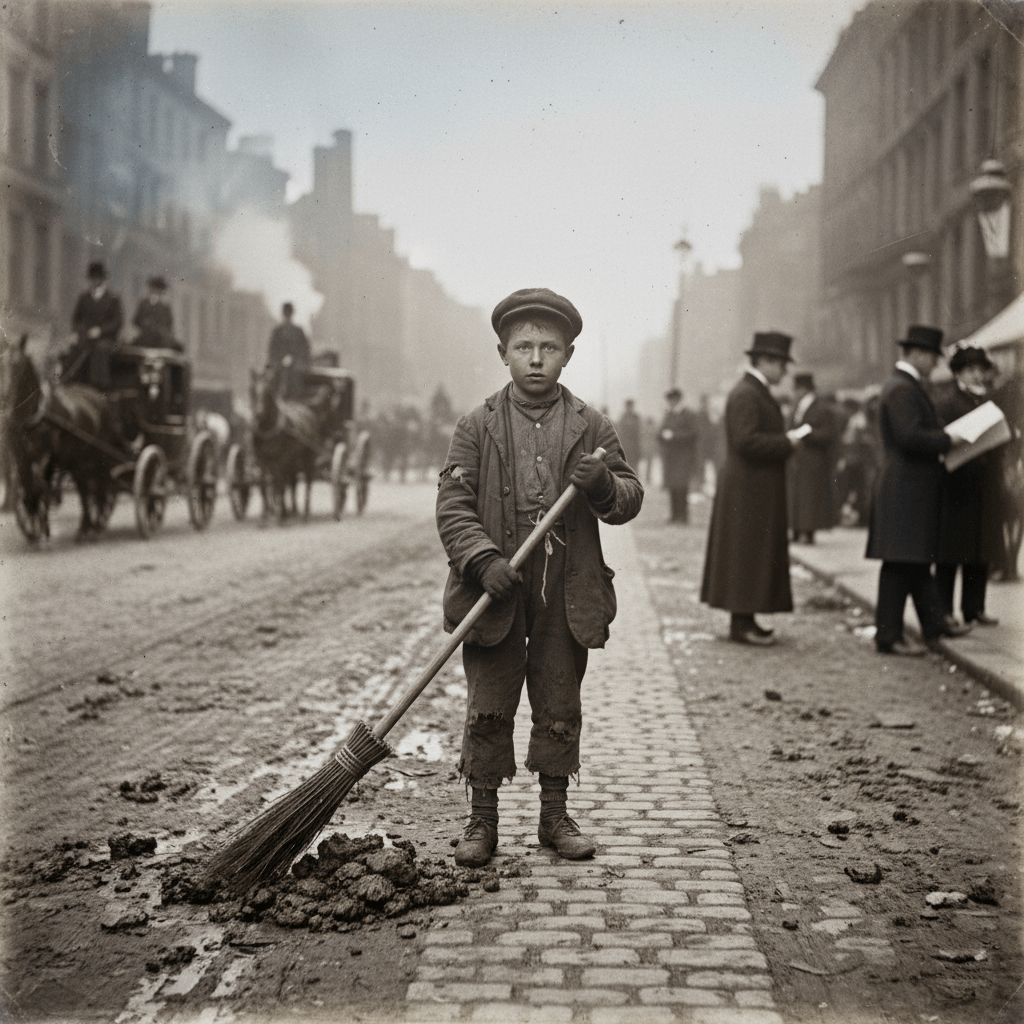
Crossing Sweeper
An extinct profession from Victorian Era that became obsolete due to technological advancement and societal change.
Media Gallery
Related Exhibits
Radio Actor
The role of a radio actor was pivotal during the Golden Age of Radio, a time when families gathered around their radios to listen to serialized dramas, comedies, and news broadcasts. Radio actors were the voices behind beloved characters, bringing stories to life through their vocal talents alone. Unlike film or television, where visual elements play a significant role, radio actors relied solely on their voices to convey emotion, character, and narrative. They performed live or recorded scripts, often in front of a studio audience, and were skilled in various genres, from soap operas to thrillers. The ability to modulate their voices, create distinct characterizations, and engage listeners through sound alone was essential to their craft. Radio actors often worked with sound effects artists and musicians to enhance the auditory experience, creating a rich tapestry of sound that captivated audiences.
Calligrapher
The art of calligraphy, often referred to as 'beautiful writing,' flourished during the Medieval Period, where skilled calligraphers played a crucial role in the preservation and dissemination of knowledge. These artisans were not merely writers; they were artists who transformed the written word into a visual spectacle. Calligraphers were responsible for creating manuscripts, religious texts, and important documents, often using intricate scripts that varied by region and purpose. Their work was characterized by the use of quills, ink, and parchment, and they often employed elaborate techniques such as gilding and illumination to enhance their creations. The calligrapher's role was not only to write but to imbue each piece with a sense of beauty and reverence, making their work essential in an era where printed materials were scarce and literacy was a privilege of the few.
Explore More Exhibits
Discover the full collection of past and future professions in The Jobs Museum.